Chemical Recycling Process of PET: Solvolysis, Chemolysis, and Advanced Recycling
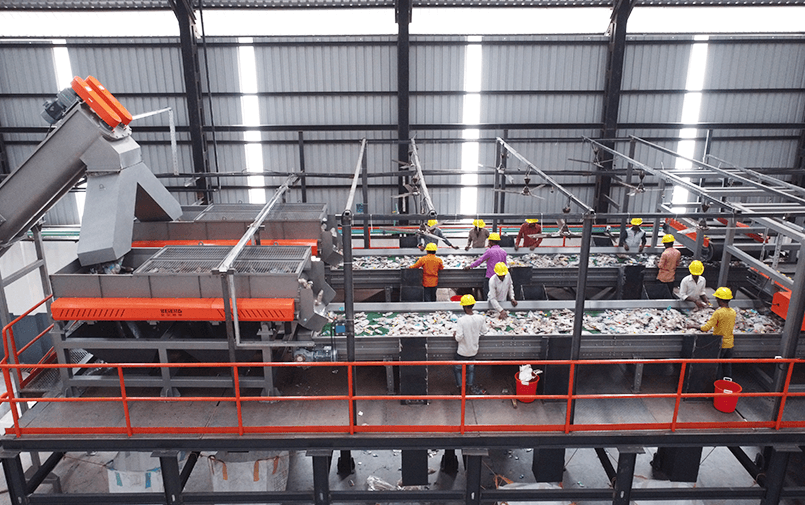
In the modern world, a single PET bottle can travel through more landscapes than most people. It begins as transparent packaging, finds its way into homes, then into bins, and from there into sorting lines that hum with conveyor belts and fluorescent light. Some bottles are washed, shredded, melted, and shaped again. Others are not so lucky. They lie beyond the reach of mechanical recycling, mixed with colors, labels, or residues that complicate reuse.
For these forgotten streams, science offers another path: the chemical recycling process. Instead of reshaping the plastic, it returns to the beginning of its molecular story, i.e., breaking down long polymer chains into their simplest, reusable building blocks. This process doesn’t disguise PET’s chemistry; it understands it deeply enough to reverse it.
Chemical Recycling Process Explained
Every method of chemical recycling follows the same core idea. PET is depolymerized into its monomers through controlled chemical reactions, using heat, solvents, or catalysts to break ester bonds. The resulting monomers or oligomers, mainly terephthalic acid and ethylene glycol, can be purified and polymerized again to form new PET. The efficiency and purity of this process depend on the route taken, which leads us into the families of reactions known as solvolysis, chemolysis, and advanced recycling.
Why Chemical Recycling Exists
Mechanical recycling can clean and remold plastics, but every cycle shortens polymer chains. Over time, strength and clarity fade. Food-grade packaging demands purity far beyond what mechanical recycling can consistently provide.
Chemical recycling, in contrast, looks inward. It separates the PET molecule into its fundamental components, terephthalic acid (TPA) and ethylene glycol (EG), and allows them to be rebuilt into material indistinguishable from virgin resin. For manufacturers, that means more control. For the planet, it means another turn in the loop.
Understanding Solvolysis, Chemolysis, and Advanced Recycling
All chemical recycling starts with depolymerization, but the path varies. Three scientific families define the field.
| Term | Description | Common Examples |
| Solvolysis | Uses a solvent such as water, glycol or alcohol to spill PET's ester bonds. | Hydrolysis, glycolysis, alcholysis |
| Chemolysis | A broader term for chemical depolymerization reactions | Includes solvolysis, aminolysis, ammonolysis |
| Advanced / Molecular / Feedstock Recycling | Industrial Umbrella for chemical routes than turn plastic into molecular feedstock | Enzymatic recycling, supercritical water hydrolysis |
These terms describe the same goal through different lenses. Solvolysis focuses on the reaction medium, chemolysis on the mechanism, and advanced recycling on its place in industry and regulation. Each approach traces a different line through the periodic table, yet all meet at the same destination: molecular renewal.
How PET Breaks Down
A PET chain is a repetition of one simple unit: terephthalate joined with ethylene glycol through ester bonds. Each recycling process targets these bonds using a chosen reagent and catalyst under controlled conditions.
The way those bonds are cut, be it by water, alcohol, glycol, amine, or enzyme, determines the name and products of the reaction.
| Method | Reagent / Catalyst |
Conditions |
Products |
Advantages |
Disadvantages |
Example Industries |
| Glycolysis |
Ethylene glycol, ZnAc |
180–240°C |
BHET, oligomers |
Mature process, moderate energy |
Catalyst recovery, colour |
Textiles, packaging |
| Methanolysis |
Methanol, ZnAc, MnAc |
180–220°C, high pressure |
DMT, ethylene glycol |
Pure monomers |
Expensive equipment |
Bottle-to-bottle |
| Hydrolysis |
Water, NaOH, acid |
200–300°C, up to 4 MPa |
TPA, EG, sodium salts |
Mixed waste tolerance |
Energy intensive |
Food, Pharma |
| Alcoholysis |
Ethanol, propanol |
180–240°C |
DET, other dialkyl esters |
Intermediate flexibility |
Product separation |
Specialty chemicals |
| Aminolysis |
Amines |
100–180°C |
Terepthalamides |
Upcycling to new polymers |
Limited scale |
Coatings, polymers |
| Enzymatic |
PETase, cutinase |
50–70°C, aqueous |
MHET, TPA, EG |
Low energy, green chemistry |
Slow kinetics |
Pilot, R&D |
Let’s walk through them one by one.
1. Glycolysis of PET
Inside the reactor, PET flakes meet an excess of ethylene glycol. The temperature rises between 180°C and 240°C. A catalyst, often zinc acetate or manganese acetate, begins the transesterification. Slowly, the polymer chains fall apart into bis(hydroxyethyl) terephthalate (BHET) and shorter oligomers.
Glycolysis is the oldest and most industrially familiar of the chemical routes. The resulting BHET, once purified, can be polymerized again into PET or converted into specialty polyesters. Some reactors use microwave-assisted heating or continuous flow systems to speed up the process and improve yields.
| Feature | Description |
| Products | BHET, oligomers |
| Catalysts | Zinc or magnanese acetate |
| Temperature range | 180 - 240°C |
| Advantages | Mature, scalable, moderate energy input |
| Challenges | Catalyst seperation, impurity removal, colour control |
Glycolysis stands out for its balance between feasibility and chemical depth. It feels less like reinventing PET and more like rewinding it.
2. Methanolysis of PET
Move up the periodic table to a lighter alcohol, methanol, and the reaction shifts. Here, PET reacts with methanol to produce dimethyl terephthalate (DMT) and ethylene glycol. The process often occurs in sealed, pressurized reactors at high temperature.
Methanolysis is one of the earliest routes explored for PET depolymerization, echoing the chemical heritage of the material itself, since DMT was once a common feedstock for PET production.
| Feature | Description |
| Products | DMT, EG |
| Catalysts | Zinc acetate, cobalt or maganese salts |
| Conditions |
Elevated presure, sometimes supercritical methanol |
| Advantages | Direct monomer recovery, compatibility with DMT-based lines |
| Challenges | High-pressure equipment, solvent recovery cost |
The appeal of methanolysis lies in purity. The DMT obtained can be purified by distillation to nearly virgin-grade clarity, an advantage for food-contact applications.
3. Hydrolysis of PET
Water can also act as a reagent. Under heat and pressure, it cuts ester bonds, yielding terephthalic acid (TPA) and ethylene glycol (EG). Hydrolysis is simple in principle, but the conditions shape the outcome.
There are four main forms:
| Type | Reaction Medium | Typical Parameters | Product |
| Netural Hydrolysis | Water or steam | 250-300°C, 1.5 - 4 MPa | TPA + EG |
| Alkaline Hydolysis | NaOH or KOH solution | 200-250°C | Disodium terephthalate, later acidified to TPA |
| Acid Hydrolysis | strong mineral acids | Lower temperature | TPA + salts |
| Supercritical Water Hydrolysis | Water above 374°C and 22 MPa | Rapid depolymerization | TPA + EG |
Hydrolysis is robust. It can handle colored and multilayer feedstock, which often jam mechanical lines. The tradeoff is energy. Steam, pressure, and post-treatment make the process more complex, but the high purity of recovered TPA keeps researchers interested.
Supercritical water hydrolysis is considered part of the solvolysis family because water acts as both solvent and reactant, allowing complete depolymerization within minutes at elevated temperature and pressure.
4. Alcoholysis with Higher Alcohols
In this variant, PET reacts with ethanol, propanol, or butanol instead of methanol. The products are dialkyl terephthalates such as diethyl terephthalate (DET), along with ethylene glycol.
| Feature | Description |
| Products | DET or other dialkyl terephthaletes |
| Catalysts | Metal acetates or transesterification catalysts |
| Conditions | Moderate to high temprature |
| Advantages | Produces intermediates for other polyesters |
| Challenges | Complex seperation, smaller industrial footprint |
Higher alcoholysis creates flexibility. It can feed multiple chemical markets, not just PET resin production.
5. Aminolysis and Ammonolysis
Instead of alcohols, these reactions use nitrogen-based compounds. Amines or ammonia attack PET’s ester bonds, forming terephthalamides.
| Reaction |
Reagent |
Product |
Application |
| Aminolysis |
Amines such as ethanolamine or hexamethylenediamine |
Terephthalamide derivatives |
Precursors for coatings and polymers |
| Ammonolysis |
Ammonia |
Terephthalamide |
Can be hydrolyzed further to TPA |
These methods open routes beyond bottle-to-bottle recycling. They lead to entirely new polymer families, where PET’s carbon atoms become part of engineering materials instead of packaging again.
6. Enzymatic PET Recycling
In nature, certain enzymes evolved to break down plant cutin, a polymer similar to PET. Scientists have adapted PETase, cutinase, and engineered variants such as LCC and FAST-PETase to work on PET itself.
Under mild temperatures of 50–70°C, these enzymes hydrolyze PET into MHET, TPA, and EG in aqueous conditions.
| Feature |
Description |
| Products |
MHET, TPA, EG |
| Catalysts |
Enzymes (PETase, cutinase, LCC, FAST-PETase) |
| Conditions |
50–70°C, aqueous medium |
| Advantages |
Gentle, low-energy, minimal chemical waste |
| Challenges |
Slow kinetics, enzyme cost, feedstock preparation |
The enzymatic route feels less like industrial chemistry and more like biomimicry, an attempt to let biology participate in circular design. Pilot projects in Europe and Japan show its growing promise.
7. Hydrogenolysis and Pyrolysis
In hydrogenolysis, PET is subjected to hydrogen under catalytic conditions, producing diols or aromatic hydrocarbons. Pyrolysis, meanwhile, uses heat alone, breaking polymers into oils, gases, and aromatic fractions.
| Process | Output | Typical Use |
| Hydrogenolysis | Diols, aromatics | Feedstock for other polymers |
| Pyrolysis | Oil and gas mixtures | Energy recovery, chemical feedstocks |
These are not closed-loop PET-to-PET pathways, but they ensure even contaminated or composite PET streams have a final outlet within the material economy.
Comparison of Chemical Recyclig Routes
| Route |
Monomer / Output |
Energy Demand |
Input Waste Type |
Purity Achievable |
Scalability |
Challenge |
Food Contact Grade |
| Glycolysis |
BHET, oligomers |
Moderate |
Clear/colored, mixed |
High |
High |
Catalyst handling |
Yes |
| Methanolysis |
DMT, EG |
High |
Mixed, multilayer |
Very High |
Medium |
High-pressure requirements |
Yes |
| Hydrolysis |
TPA, EG |
High |
Mixed, multilayer, labels |
High |
Medium |
Energy demand |
Yes |
| Higher Alcoholysis |
DET, EG |
Medium |
Mixed PET, complex waste |
Medium |
Low |
Separation complexity |
Possible |
| Aminolysis / Ammonolysis |
Terephthalamides |
Moderate |
Mixed, fiber-rich PET |
Low |
Low |
Limited closed-loop use |
Limited |
| Enzymatic |
MHET, TPA, EG |
Low |
Clean, basic PET |
High |
Pilot stage |
Scale-up and cost |
Yes |
| Hydrogenolysis / Pyrolysis |
Oils, gases, aromatics |
High |
Any, heavily contaminated |
Variable |
Medium |
Not PET-specific reuse |
No |
Each method exists on a spectrum from industrial reality to laboratory exploration. Together, they illustrate how chemistry approaches the same goal through many doors.

Choosing a Route: Factors Manufacturers Consider
Every manufacturing team balancing sustainability goals and operational constraints will look at similar questions:
- Feedstock Quality – What contamination levels and colors dominate your stream?
- End-Use Purity – Are you targeting food-contact resin or textile-grade fiber?
- Energy and Solvent Loops – Can your site support high pressure or temperature, and recycle the solvents safely?
- Certification Requirements – Will you claim mass balance recycled content under ISCC PLUS or do you need compliance under regional regulations like FDA in the US?
- Integration Potential – Can depolymerization outputs plug into your polymerization unit without major redesign?
The answers define not only the chemistry but the economics.
Chemical Recycling and the Circular Future of PET
In a circular economy, the goal is not only to recycle but to maintain value. The chemical recycling process achieves that by recovering the exact molecules that once formed the polymer. The carbon atoms return, ready for another cycle.
Solvolysis routes like hydrolysis and glycolysis handle large waste volumes. Chemolysis expands the menu with amines and alcohols. Advanced and enzymatic recycling explore new territory at the interface of biology and materials science.
Together, they turn PET from a single-use polymer into a renewable feedstock. At JBrPET, we think it is essential for manufacturers and suppliers of rPET resins to have detailed knowledge about CrPET resins and their varied applications.
Commercial Applications of Chemically Recycled PET
Food & Beverage Packaging:
- Bottle-to-bottle rPET for carbonated drinks, water bottles, and juice containers with FDA/FSSAI approval
- Food trays and containers for ready-to-eat meals, frozen foods, and microwaveable packaging
- Pharmaceutical packaging including high-barrier vials and blister packs for sensitive medications
- Cosmetic containers for creams, emulsions, and personal care products
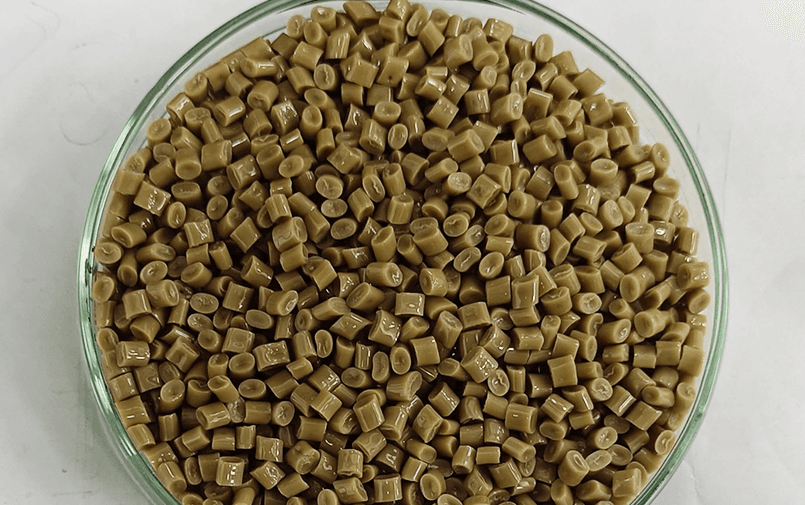
Textile & Fashion Industry:
- Performance sportswear using recycled PET fibers for moisture-wicking and durability
- Home textiles including eco-friendly carpets, rugs, and upholstery fabrics
- Industrial textiles for geotextiles, automotive interiors, and technical fabrics
- Fashion apparel including jackets, t-shirts, shoes, and handbags from major sustainable brands
Automotive Applications:
- Interior components using rPET for seat fabrics, door panels, and dashboard elements
- Insulation materials for thermal and acoustic management in vehicles
- Under-hood components for non-critical automotive parts
Construction & Building:
- Insulation products for energy-efficient building construction
- Roofing materials incorporating recycled PET for enhanced durability
- Geotextiles and membranes for civil engineering and infrastructure projects
Packaging Films & Sheets:
- Flexible packaging for food wrapping and industrial applications
- Thermoformed sheets for packaging trays and containers
- Barrier films with enhanced properties for extended shelf life
The above applications are proof that versatility of rPET lies in chemistry’s precision. When monomers return to purity, their destination, bottle, tray, or fabric, becomes a question of design and not limitation.

Environmental Impact of Chemical PET Recycling
Chemical recycling of polyethylene terephthalate (PET) offers significant environmental advantages over traditional methods, with growing interest worldwide in technologies such as glycolysis, hydrolysis, methanolysis, and enzymatic depolymerization. Life cycle analysis (LCA) studies show that chemical PET recycling can reduce greenhouse gas emissions (GHGs) by approximately 55–80% compared to virgin resin production. This wide range depends on the specific recycling process, the type of energy used, and facility scale.
While chemical recycling processes such as glycolysis and hydrolysis, typically require 10–40% more energy input than conventional mechanical recycling, they achieve higher yields of food-grade resin and enable the closed-loop recycling of even contaminated or colored PET waste. These advanced recycling methods can treat a far broader range of feedstocks, diverting more plastic waste from landfills and incineration.
Modern chemical recycling plants employ improved solvent recovery and catalyst systems to minimize water consumption, often achieving lower water use than older mechanical recycling units. Enzymatic PET recycling is a promising alternative, with pilot studies indicating reduced energy requirements and lower carbon footprint compared to chemical and mechanical processes.
Chemical recycling also restores PET to its original monomer state (such as BHET, DMT, or TPA), enabling truly closed-loop applications in food contact packaging, textiles, and other high-value products. Research demonstrates resin yields from chemical recycling in the range of 85–97%, depending on feedstock quality and process efficiency.
Key Points:
- Chemical PET recycling reduces GHG emissions by 55–80% versus new resin production.
- Energy use is higher than mechanical recycling, but enables more flexible handling of mixed and contaminated PET.
- Yields of food-grade recycled PET reach up to 97% in optimized systems, enabling closed-loop solutions.
- Modern processes minimize water consumption for improved environmental footprint.
- Enzymatic methods show further promise for low-carbon, low-energy PET recycling.
By implementing chemical recycling technologies and best available practices, PET waste recycling can advance sustainability, reduce landfill volumes, and supply high-quality recycled resin to global markets.
Market Value & Growth Projections:
- Global rPET market: $12.85 billion (2024) → $29.19 billion (2034)
- CAGR: 8.55% growth rate driven by sustainability mandates
Each and every application of rPET depends on purity and certification, both achievable through verified chemical depolymerization and controlled polymerization.
Sourcing Guide: Answers to Common Buyer Queries About rPET and CrPET Products
1. Is chemically recycled PET (crPET) available in food-grade for bottle-to-bottle applications?
Yes, chemically recycled PET is available in food-grade quality and meets major food safety standards (such as FSSAI, EFSA, FDA). It is suitable for bottle-to-bottle applications and other packaging that requires direct food contact.
2. What certifications do your rPET and crPET products have?
Our T2T rPET and chemically recycled PET resins comply with international food-contact standards and are certified as per FDA, ISCC, GRS and OEKO regulatory requirements.
3. Can you supply chemically recycled PET suitable for use in textiles or automotive applications?
Yes, we supply CrPET grades designed for textile fibers, filament yarn, technical textiles, automotive interiors, and nonwovens, providing consistent properties and high color stability.
4. What is the minimum order quantity (MOQ), and do you support bulk shipments for export?
We offer flexible minimum order quantities based on grade and client requirements, and can fulfill bulk orders with export-ready packaging. For large buyers, containerized deliveries and direct shipping arrangements are available. Get in touch for more information.
5. How does the pricing of chemically recycled PET compare to mechanical rPET and virgin PET?
While pricing can fluctuate with feedstock and demand, chemically recycled PET may carry a modest premium over standard rPET due to higher purity and process costs but is more competitive than virgin PET when sustainability credits, quality, and regulatory incentives are considered. We provide detailed quotations for every order size.
6. What technical data and quality documentation do you provide with your crPET shipments?
Every shipment comes with a certificate of analysis (COA), batch test reports, and material safety data sheets (MSDS). Technical specs including IV (intrinsic viscosity), color, heavy metals, and contamination profiles are provided up front for client assurance.
Where JBrPET Fits in This Story
At JBrPET, the conversation around chemical recycling is not about promises; it is about readiness. Manufacturers today seek clarity about how each route works, how it scales, and how certification links to traceability. Our role is to help connect these questions to actionable insight.
We focus on the chemically recycled PET resin space, particularly the development and integration of crPET resin that supports bottle-to-bottle and textile-to-textile applications. Our commitment lies in transparency and collaboration, working with partners who share the goal of transforming recycled feedstock into consistent, compliant, and verifiable circular materials.
To explore how chemical recycling connects with your operations, visit our page on CrPET resin and begin a conversation grounded in chemistry and innovations.
This article is an educational overview referencing published research in polymer science. All reaction conditions are general and may vary by process design. JBrPET does not claim commercial operation of any specific method described. Always verify process parameters and compliance details for your specific region and application.