PET Chemical Recycling Process for Premium rPET Products
At the heart of our operations lies a commitment to innovation and sustainability. Through advanced PET chemical recycling process capabilities, we transform post-consumer PET bottles and polyester waste into high-quality rPET that meets and often exceeds the performance of virgin material.
Our chemical recycling technology is engineered to support large-scale bottle recycling, plastic bottle recycling streams, and textile recycling applications. By applying controlled chemical depolymerization, we break down polyethylene terephthalate at the molecular level, removing impurities that conventional recycling processes cannot eliminate.
The result is consistent, high-purity output suitable for food-grade packaging, polyester recycling, and industrial rPET products. Our integrated recycling process, from PET flakes preparation to continuous polymerization, ensures precision, reliability, and measurable impact within the evolving recycling industry.
What is the PET Chemical Recycling Process?
The PET chemical recycling process is an advanced method of breaking down polyethylene terephthalate into its fundamental building blocks through controlled chemical depolymerization. Unlike conventional mechanical recycling, chemical recycling of polyethylene terephthalate removes impurities at the molecular level.
At JB rPET, our chemical recycling technology:
This allows us to manufacture rPET products that meet stringent food-grade and textile-grade requirements.
From PET Bottles to rPET Products: Our Recycling Process
Our recycling process is engineered to support both bottle recycling and polyester recycling applications.
Plastic Bottles Recycling & Sorting
Plastic Bottles Recycling & Sorting
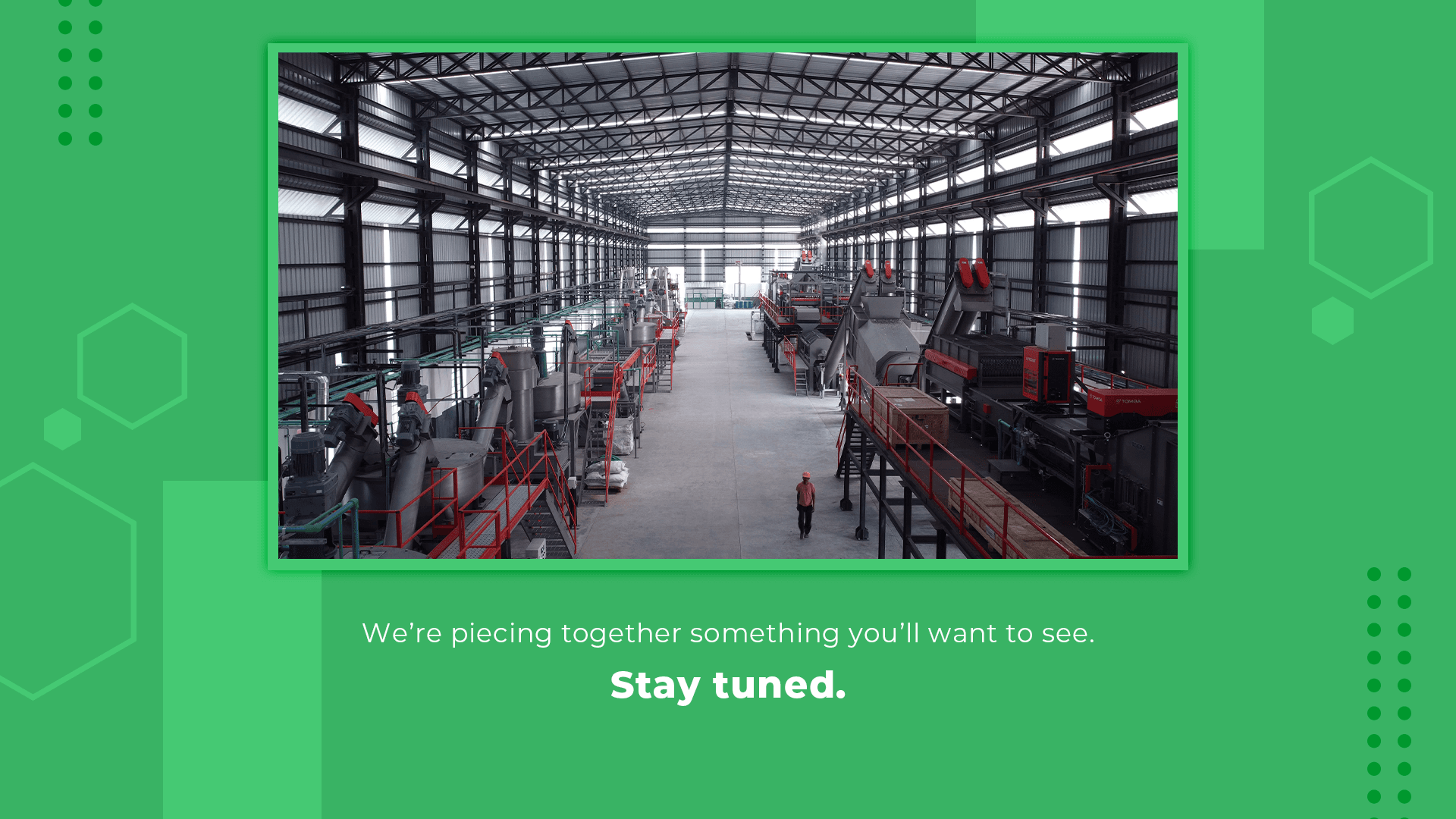
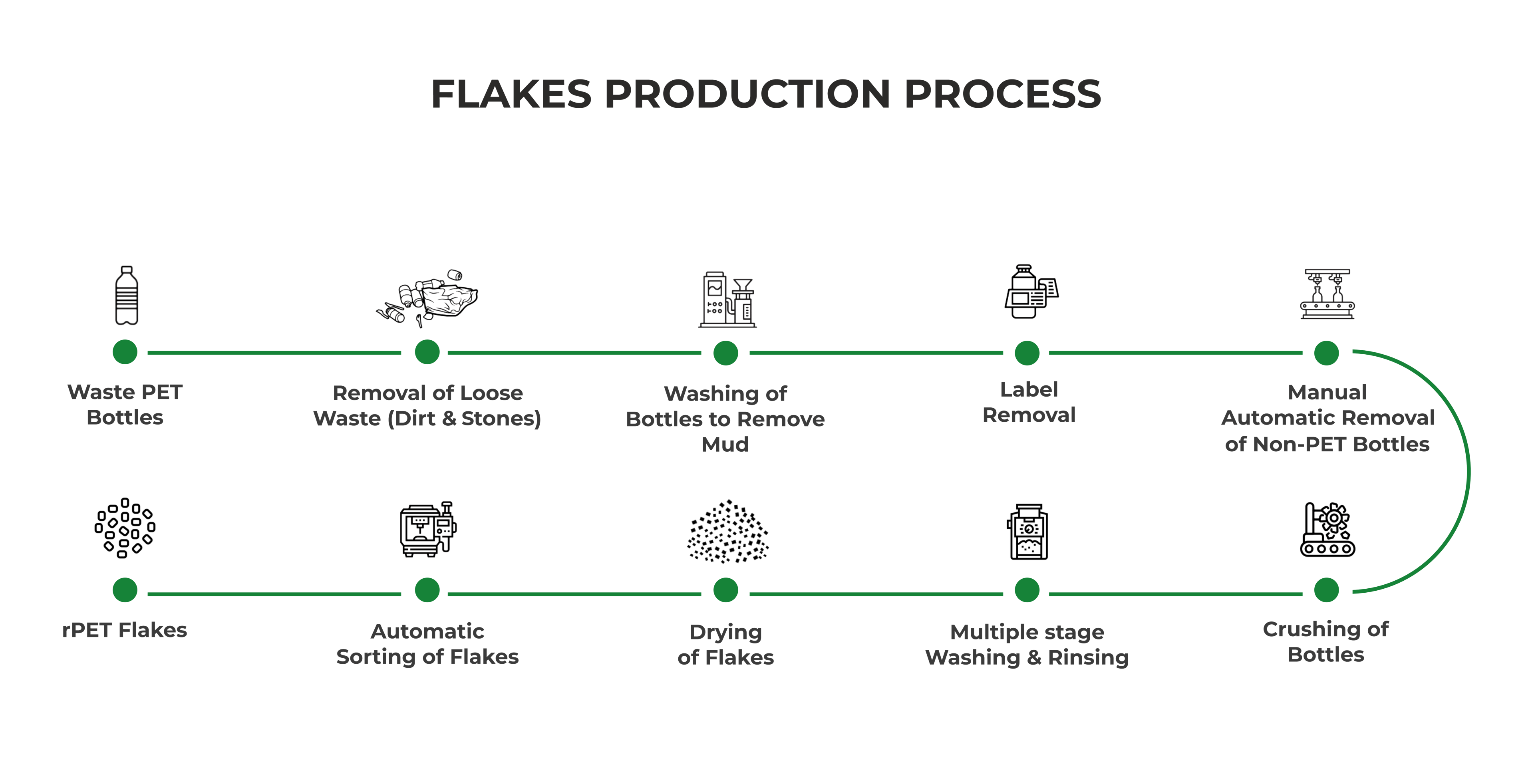
Collected PET bottles and industrial polyester waste are sorted, cleaned, and converted into high-quality PET flakes.
Chemical Depolymerization
Chemical Depolymerization
Through our controlled PET chemical recycling process, the polymer chains are broken down into purified intermediates, removing color, additives, and contamination.
Repolymerization & Polymer Control
Repolymerization & Polymer Control
Using continuous polymerization technology, we rebuild molecular chains to produce consistent IV and performance-grade material.
rPET Products Manufacturing
rPET Products Manufacturing
The output supports:
- Bottle-to-bottle recycling
- Textile recycling
- Polyester recycling
- Industrial packaging and technical textiles
- High-performance rPET recycling applications
- Resins for Masterbatch Production
- Monofilament Grade Resins
- PET Strap Grade Resins
This integrated approach positions us as a leading recycling company within the global recycling industry.

Advanced In-House rPET Testing & Quality Control
A state-of-the-art laboratory staffed by seasoned polymer experts anchors our quality program.
JB rPET ensures uncompromising quality across all rPET products with in-house testing on GC-MS-HS (Perkin Elmer), ICP-MS, DSC, IV Bath, and Spectrophotometer. Every batch of PET flakes, food-grade rPET resins, and recycled polyester staple fiber is validated for IV, AA, and contaminants. Backed by expert technicians and advanced tools, our lab supports reliable results for PET flakes buyers, converters, and global brands committed to performance, safety, and circularity.
Chemical Recycling for Textile and Polyester Applications
Textile recycling is one of the fastest growing areas in sustainable manufacturing. Our PET chemical recycling process supports large-scale polyester recycling from both post-consumer garments and industrial textile waste.
Through advanced chemical depolymerization, we convert polyester waste into high-purity inputs suitable for:
- Recycled polyester staple fiber
- Filament yarn production
- Bottle-to-textile applications
- Textile-to-textile recycling systems
By integrating textile waste recycling into our operations, we reduce landfill burden and strengthen circular supply chains.
Why Chemical Recycling ?
Virgin-Grade rPET Quality
100% Waste Recycling Company
State-of-the-Art PET Washing Line
Low-Temperature Depolymerization
High-Precision Filtration Technology
Continuous Polymerization Plant
Chemical recycling enables true circularity in the recycling industry by restoring PET to near-virgin molecular structure. While mechanical recycling is effective for specific streams, chemical recycling of polyethylene terephthalate ensures removal of deep contaminants, dyes, and degraded polymer chains.
Our chemical recycling technology supports:
This ensures long-term scalability and performance reliability.
As a vertically integrated recycling company, JBrPET combines:
Our operations process PET bottles, polyester waste, and PET flakes at industrial scale, supporting converters, global brands, and manufacturers across packaging and textile sectors.
We operate at the intersection of innovation and sustainability within the evolving recycling industry.
Technical & Commercial FAQs on PET Chemical Recycling Process
The PET chemical recycling process involves breaking down polyethylene terephthalate through chemical depolymerization to recover purified raw materials that can be repolymerized into high-performance rPET products.
Chemical recycling removes contaminants at a molecular level, allowing for higher purity output suitable for food-grade and textile applications.
Yes. Textile waste recycling using chemical depolymerization enables polyester recycling and textile-to-textile circularity.
Our chemical recycling technology processes PET bottles, plastic bottles recycling streams, polyester textiles, and high-PPM PET flakes.
Our PET chemical recycling process enables controlled depolymerization and repolymerization, allowing precise IV targeting suitable for bottle-to-bottle, thermoforming, and polyester fiber applications.
Consistency is maintained through controlled chemical depolymerization, continuous polymerization systems, 2–3 micron filtration, and in-house laboratory validation for IV, AA, contaminants, and molecular integrity.
Yes. Our chemical recycling technology is designed to handle mixed-color PET flakes, contaminated feedstock, and high-PPM streams from plastic bottles recycling and textile waste recycling sources.
Our PET chemical recycling process enables purification at the molecular level. Final suitability for food-grade applications depends on regulatory pathway and customer-specific compliance requirements.
Yes. Through chemical recycling of polyethylene terephthalate, we enable polyester recycling from textile waste, supporting fiber-grade and textile-to-textile circular systems.
We process post-consumer PET bottles, industrial polyester scrap, and PET flakes generated from bottle recycling and textile recycling streams.
Unlike traditional mechanical recycling, chemical depolymerization restores polymer chains to near-virgin structure, improving clarity, strength, and long-term recyclability within the recycling industry.