Resins for PET Monofilament Production (PET Monofilament)
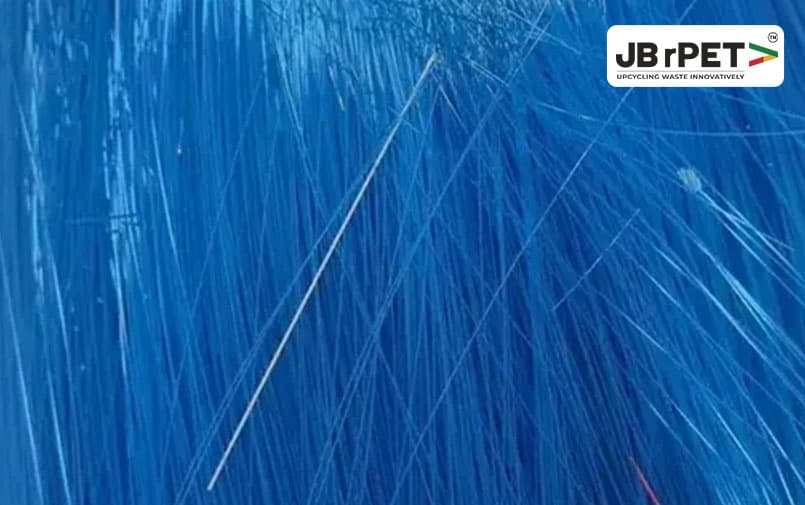
JBrPET supplies resins for PET monofilament production for manufacturers who require consistent polymer behavior, stable extrusion, and reliable filament output.
In monofilament manufacturing, the resin as a monofilament raw material directly influences extrusion performance, filament strength, and process consistency. Selecting the right PET raw material is essential for maintaining uniform production across batches.
We work with monofilament yarn manufacturers and industrial processors to supply PET resin aligned with extrusion systems and end-use applications.
What is PET Monofilament?
PET monofilament is a single continuous strand made from polyester polymer through an extrusion process.
It is often referred to as a single polyester yarn, as it consists of one filament rather than multiple fibers bundled together.
Compared to multifilament yarns, PET monofilament offers:
- Higher rigidity
- Defined diameter control
- Consistent structural performance
This makes it suitable for applications requiring durability and dimensional stability.
What Are Resins for PET Monofilament Production?
Resins for PET monofilament production are PET-based materials used as the primary polymer raw material in extrusion-based filament manufacturing.
These resins are typically supplied as:
- PET chips for monofilament
- PET yarn grade chips
- Fiber grade chips
They must support stable melting, uniform flow, and controlled filament formation during the monofilament process.
How PET Resin Is Used in Monofilament Manufacturing
In monofilament manufacturing, PET resin follows a structured process:
1. Drying to reduce moisture
2. Melting and extrusion through dies
3. Filament formation and cooling
4. Drawing and orientation
The behavior of the resin during this monofilament process determines:
- Filament uniformity
- Surface consistency
- Mechanical strength
- Production stability
This is why selecting the right raw material for polyester yarn is critical.
Resin Compatibility with Monofilament Extrusion Line
In any monofilament extrusion line, resin performance directly affects line efficiency and output quality.
PET resin used for monofilament production must support:
- Smooth melt flow through extrusion systems
- Stable filament formation during continuous runs
- Compatibility with extrusion speed and drawing conditions
Our processes ensure that the monofilament raw material produced is recycled PET resin that is aligned with extrusion line parameters, which helps maintain consistent production without unnecessary variation.
Applications of PET Monofilament
PET monofilament is used across industries where strength and durability are required:
- Industrial applications
- Textile and yarn-based applications
- Filtration and technical uses
- Extruded filament products
We ensure that the CrPET resins are produced to meet your exact requirements.
PET Chips for Monofilament Production
PET resins, also known as PET chips, act as the base polymer raw material in monofilament production.
These include:
- PET yarn grade chips
- Fibre-grade chips
- Chips for monofilament applications
The quality of PET chips influences:
- Melt consistency
- Extrusion stability
- Filament formation
For manufacturers evaluating PET flakes alternative options, resin-based inputs offer more controlled and predictable processing behavior compared to variable feedstock sources.
Raw Material for Polyester Yarn and Filament Production
PET is widely used as a polymer raw material in both filament yarn and monofilament production.
As a polyester polymer, it supports:
- Structural strength
- Process adaptability
- Compatibility with extrusion systems
This makes PET a preferred material across filament and yarn manufacturing applications.
Key Factors in Choosing PET Raw Material for Monofilament
When selecting PET raw material for monofilament, manufacturers typically evaluate:
- Melt behavior during extrusion
- Moisture sensitivity and drying requirements
- Batch-to-batch consistency
- Compatibility with extrusion lines
- Stability during drawing and orientation
These factors directly influence performance in the final filament.
Monofilament Manufacturing and Process Stability
In monofilament manufacturing, small variations in raw material can affect:
- Diameter consistency
- Strength uniformity
- Process efficiency
For this reason, monofilament yarn manufacturers prioritize PET resin that supports stable, repeatable processing conditions.
Where Monofilament Production Typically Faces Challenges
In monofilament manufacturing, production inconsistencies are often traced back to raw material behavior.
Common issues include:
- Variation in filament diameter across runs
- Breakage during drawing or orientation
- Unstable melt flow during extrusion
- Frequent adjustments required on the extrusion line
These challenges are not always equipment-related. In many cases, they originate from inconsistent or unsuitable PET raw material.
For manufacturers, resolving these issues starts with selecting resin that supports stable and repeatable processing and these are the things, we at JBrPET, are particularly vigilant about.
What Changes When the PET Resin Is Aligned to Your Process
When PET resin is aligned with your monofilament extrusion line, the impact is visible across production:
- More stable extrusion behavior
- Reduced variation in filament formation
- Better control over diameter and strength
- Fewer interruptions during continuous runs
For monofilament yarn manufacturers, this translates into more predictable output and smoother production cycles.
Why Chemical Recycling Supports Consistent PET Resin for Monofilament Production
For monofilament production, consistency at a molecular level plays a role in maintaining stable extrusion and predictable filament formation.
JB rPET produces PET resin through a chemical recycling process that breaks down post-consumer PET into its core molecular components and rebuilds it into purified polymer chains.
This process helps:
- Restore polymer structure rather than mechanically reprocessing flakes
- Maintain consistency across batches
- Support stable processing behavior during extrusion
For manufacturers, this enables PET resin to function reliably as a polymer raw material in monofilament production without introducing variability from mixed input streams.
Why JBrPET Is a Practical Choice for PET Monofilament Resin Supply
JBrPET focuses on supplying PET resin that aligns with real manufacturing requirements in monofilament production.
Our approach is built around:
- Chemical recycling-based resin
production
PET is rebuilt at a molecular level to support consistent polymer structure - Application-focused material
alignment
Resin is positioned based on how it behaves in extrusion, not just general specifications - Consistency across batches
Stability in raw material helps reduce variability in production - Understanding of
extrusion-based processes
We work with manufacturers who operate monofilament extrusion lines and require predictable material behavior
For monofilament manufacturers, the focus is not just on sourcing PET raw material, but on how that material performs during continuous production.
JBrPET supports this by supplying PET resin that aligns with process stability and repeatable output.
PET Raw Material Supply for Monofilament Manufacturers in India
We work with:
- Monofilament yarn manufacturers
- Industrial filament producers
- Buyers sourcing PET raw material in India
Our approach focuses on:
- Consistent material supply
- Alignment with production requirements
- Clear documentation such as COA where applicable
Why JBrPET Resins Are Used for Monofilament Production
JBrPET focuses on supplying PET resin that aligns with real manufacturing conditions rather than generic specifications.
What differentiates our approach:
- Consistent polymer structure through chemical recycling
- Alignment with extrusion-based applications like monofilament manufacturing
- Focus on process stability rather than just material supply
- Experience working with industrial PET applications
We do not position our resin as a universal solution. Instead, we align it with your specific production requirements based on your specific application.
Who We Work With
Our PET resin for monofilament production is used by:
- Monofilament yarn manufacturers
- Industrial filament producers
- Extrusion-based polymer processors
These manufacturers typically require:
- Stable processing behavior
- Consistent raw material supply
- Predictable output across batches
PET Monofilament Resin – Frequently Asked Questions
What is PET monofilament?
PET monofilament is a single continuous strand made from polyethylene terephthalate resin through an extrusion process. It is used in applications that require strength, rigidity, and dimensional consistency, unlike multifilament yarn which consists of multiple fine fibers combined together.
What raw material is used for monofilament production?
PET resin is the primary raw material used for monofilament production. It is typically supplied as PET chips, which are dried, melted, and extruded to form continuous filaments. The quality and consistency of the resin directly affect extrusion stability and filament performance.
What are resins for PET monofilament production?
Resins for PET monofilament production are PET-based polymer materials used as the base input in extrusion processes. These resins must support controlled melt flow, consistent processing behavior, and compatibility with downstream applications to ensure stable filament formation during manufacturing.
What are chips for monofilament?
Chips for monofilament are PET polymer granules used as feedstock in extrusion-based filament manufacturing. These chips melt under controlled conditions and are extruded into single filaments. Their consistency and moisture control play an important role in achieving stable processing and uniform output.
What is the monofilament manufacturing process?
The monofilament manufacturing process involves drying PET chips, melting the polymer, extruding it through dies, cooling the filament, and drawing it to achieve strength and orientation. Each stage depends on stable resin behavior to ensure consistent filament diameter and mechanical properties.
What is a monofilament extrusion line?
A monofilament extrusion line is a production system used to convert PET resin into continuous single filaments. It includes drying units, extruders, spinnerets, cooling systems, and drawing mechanisms. Resin compatibility with the line is important for maintaining stable processing and output consistency.
Why is PET used in monofilament production?
PET is used in monofilament production because it offers a balance of strength, durability, and process adaptability. As a polyester polymer, it supports extrusion-based manufacturing and allows consistent filament formation, making it suitable for industrial and textile applications requiring structural stability.
What are carrier properties of PET in filament production?
In filament production, PET functions as a structural polymer rather than a carrier resin like in masterbatch. Its role is to form the filament itself, providing strength, shape, and stability. The polymer’s consistency directly influences extrusion behavior and final filament quality.
What is the difference between filament yarn and monofilament?
Filament yarn consists of multiple fine strands grouped together, while monofilament is a single, thicker strand. Monofilament offers higher rigidity and defined diameter, whereas filament yarn provides flexibility and softness, making each suitable for different textile and industrial applications.
Can recycled PET be used for monofilament production?
Recycled PET can be used in monofilament production when it provides consistent polymer structure and stable processing behavior. Chemically recycled PET, in particular, allows reconstruction of polymer chains, supporting uniform extrusion and reducing variability compared to mixed or mechanically processed inputs.
What factors affect monofilament production quality?
Monofilament production quality depends on resin consistency, moisture control, extrusion stability, and drawing conditions. Variations in PET raw material can lead to uneven filament diameter, breakage, or processing instability, making resin selection a critical factor in maintaining consistent output.
Who supplies PET resin for monofilament production in India?
PET resin for monofilament production in India is supplied by manufacturers like JBrPET, who provide PET raw material aligned with extrusion-based filament manufacturing. Suppliers typically support manufacturers with consistent material quality, documentation, and application-focused resin selection.
Enquire for PET Resin for Monofilament Production
If you are sourcing resins for PET monofilament production, share your application type, extrusion setup, monthly volume and any other processing requirements and we will align PET resin options based on your manufacturing needs.
Share Your Requirements