The Role of Packaging in Carbon Reduction
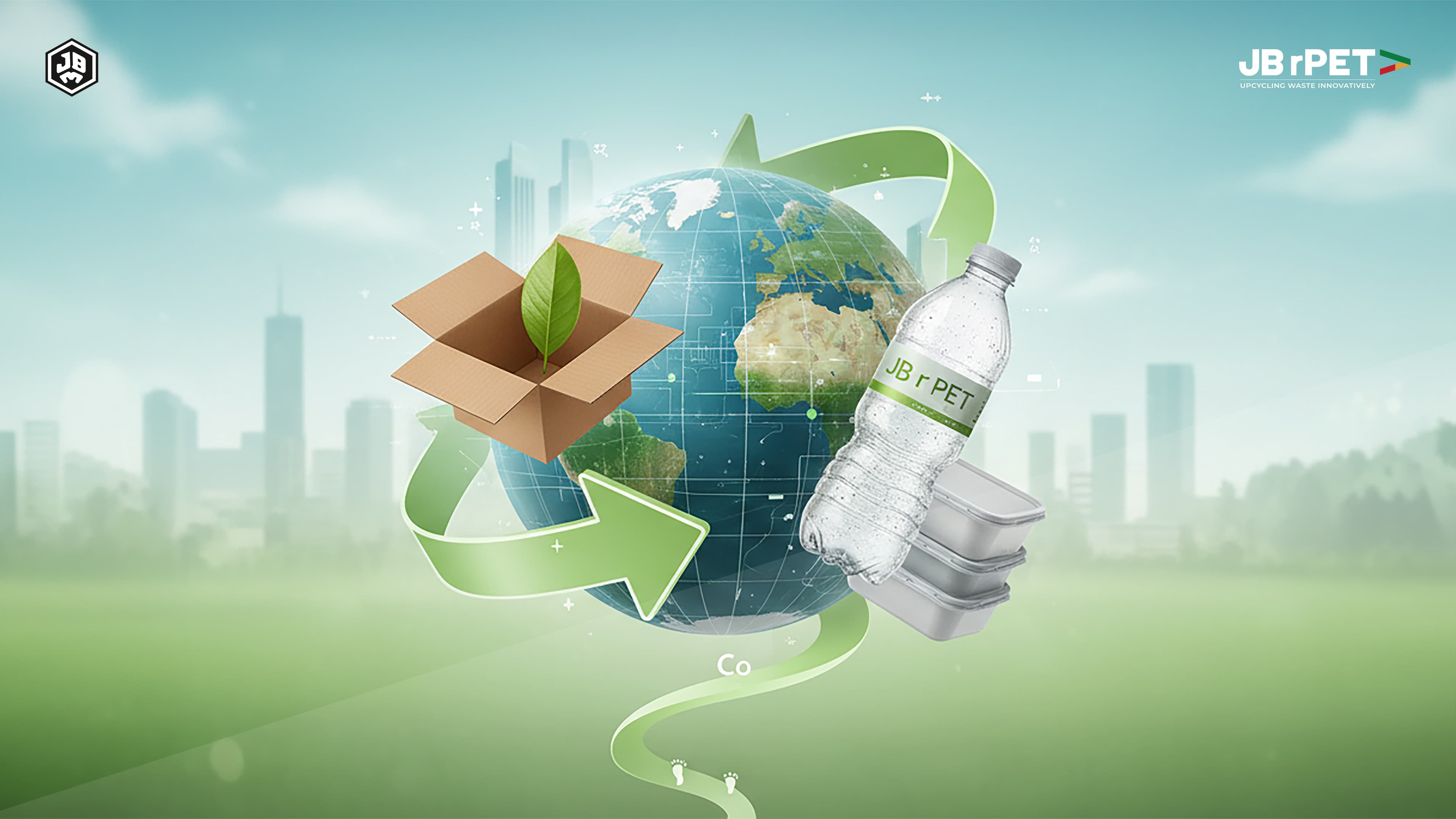
Let’s get real. Packaging used to be pretty much the wallflower of sustainability conversations. Just something you tossed in recycling (hopefully). But oh, how the times have changed! We’re here to show you that the role of packaging is more exciting and earth-saving than you might think.
At JB rPET, we believe the role of packaging goes far beyond protecting products or catching eyes on shelves. Packaging is now a frontline warrior in carbon reduction, if designed, chosen, and managed smartly.
For businesses that want real impact, the role of packaging is every choice around size, materials, reuse, and lifecycle that adds up to a greener future. In this blog, we break down why every millimetre, every recycled loop, and every thoughtful refill can shrink your carbon footprint and boost business value.
Role of Packaging Size and Simplicity
Let’s kick off with the obvious but often overlooked truth: less packaging often equals less carbon. It’s simple physics and logistics.
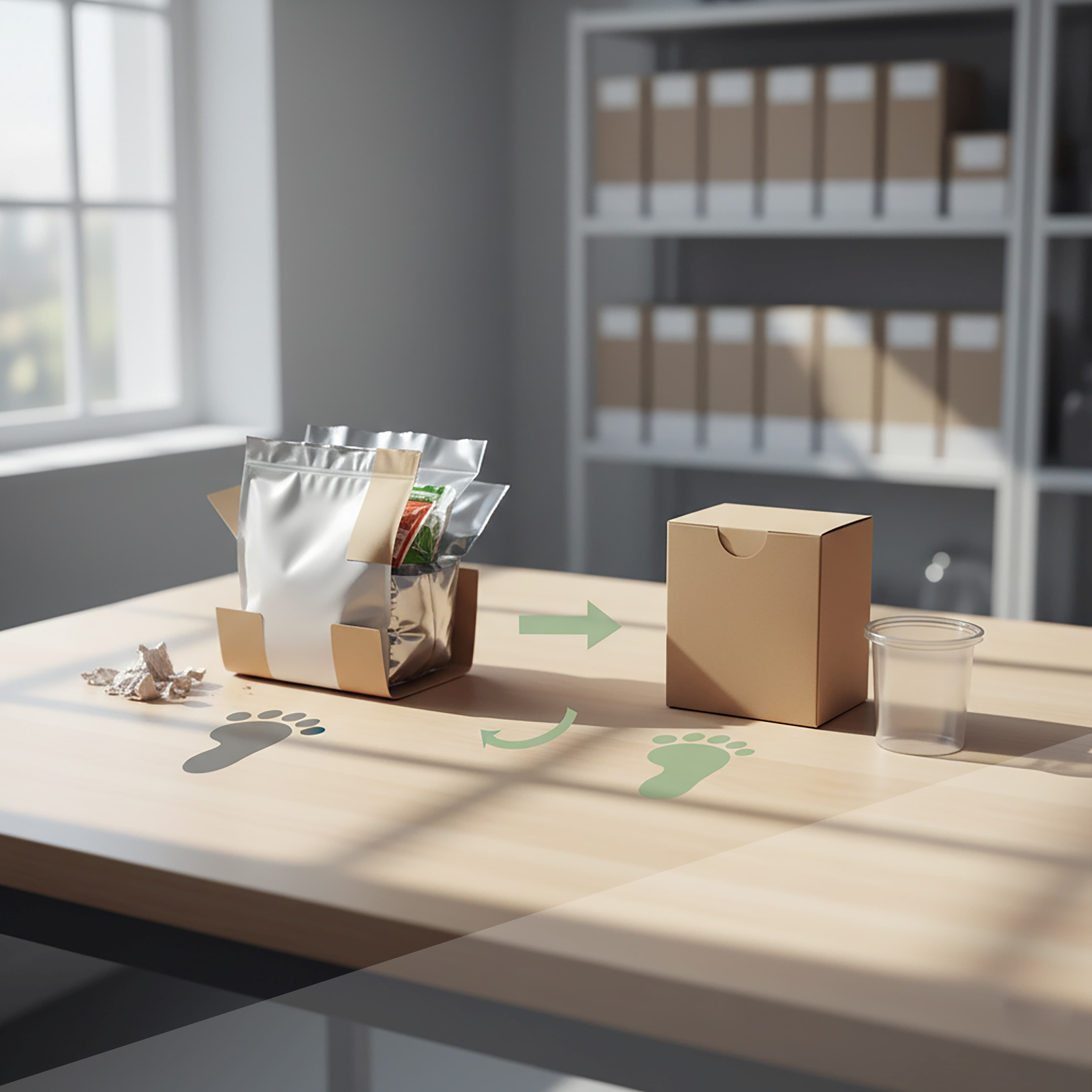
Every gram of excess material adds to the carbon footprint on food packaging and other goods. More material means:
- More raw fossil fuels are extracted and processed,
- More energy is used up in manufacturing,
- More space is taken on transport vehicles, and more emissions per shipment.
- More waste is generated, needing recycling or landfill space.
The numbers are clear: by slimming down packaging, cutting out extra layers, and sticking to a single material, businesses can aim to slash related greenhouse gas emissions by up to 30%. That’s a serious carbon win!
Multilayer barrier packs might protect contents superbly, but they usually wreck recyclability and add hidden carbon baggage. Our mission? Streamlined designs that work hard yet keep it clean for recycling streams.
rPET Content Packaging
When it comes to slashing carbon emissions in packaging, recycled PET is an evidence-backed necessity. that producing rPET consumes only a fraction of the energy needed for virgin PET and can reduce CO₂ emissions by up to 80%. For large-scale food and beverage brands moving millions of bottles a year, those savings aren’t just numbers; they’re a massive step toward meaningful climate action.
But the real story begins beyond the factory gates. rPET content packaging carries a quiet story of renewal, where yesterday’s discarded plastic is given a second chance today. Collected, cleaned, and transformed into new, high-quality packaging, its circularity is evident, one bottle at a time.
Moreover, every unit of rPET purchased creates tangible downstream effects. First, it drives real investment into better collection and recycling infrastructure, fixing the gaps that have long held back true circularity. Second, it gives confidence to regulators, partners, and consumers alike that this isn’t just sustainability talk. It’s proof that circularity can be measured, scaled, and felt, in both the market and the climate.
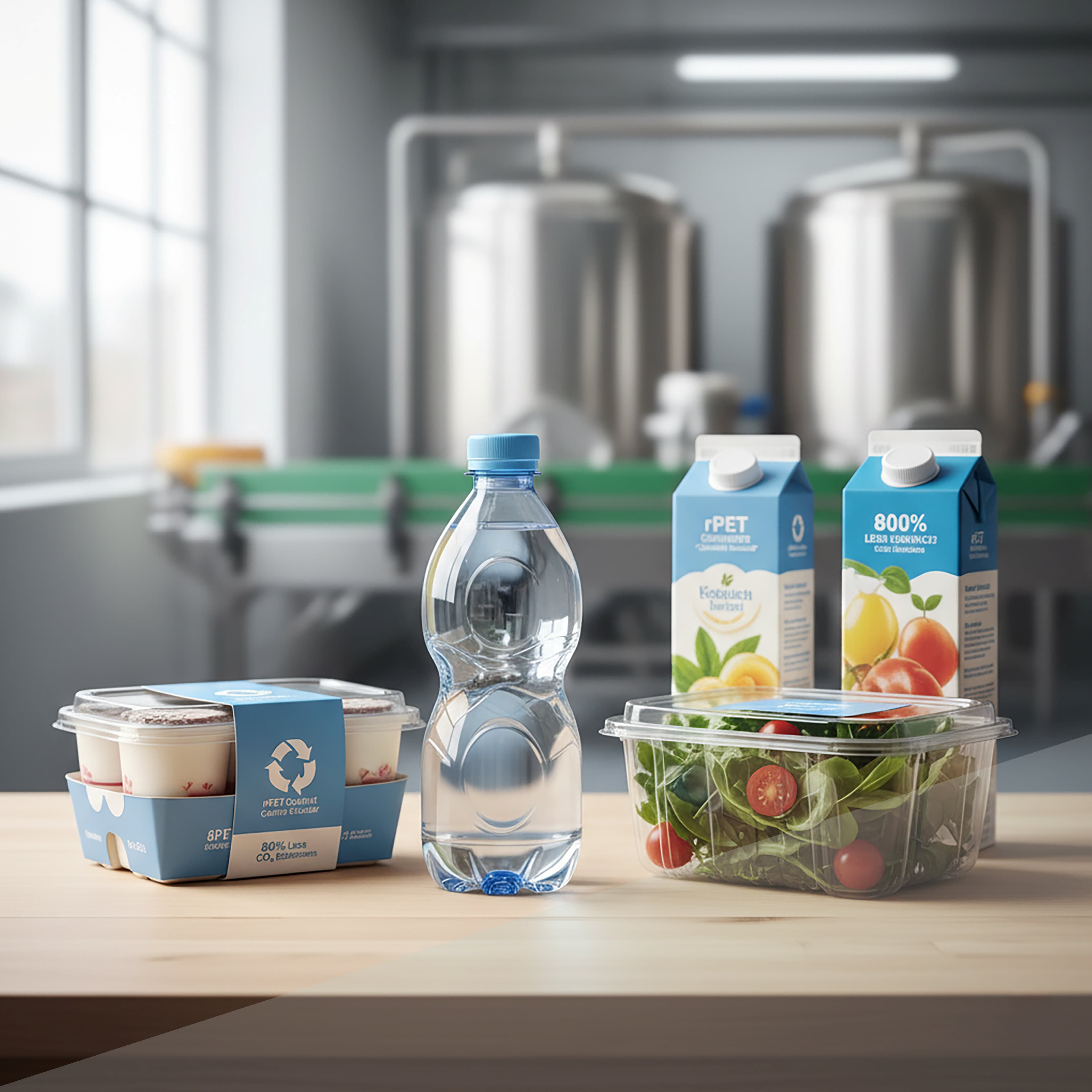
For food producers and packagers, rPET’s value proposition is especially potent. Unlike many “green” materials that might raise questions about safety or shelf life, rPET has established its credentials for food contact, offering the confidence that eco-friendly packaging doesn’t come at the expense of product integrity.
Role of Packaging Reuse and Refill
One of the most exciting frontiers in carbon reduction is how the role of packaging can move from single-use toss to multiple-use trust. Reusable and refillable packaging models slash emissions by distributing manufacturing-related carbon over many journeys rather than just one.
This approach aligns perfectly with circular economy packaging strategies. At JB rPET, we collaborate with businesses to design and manufacture durable, easy-to-maintain reusable containers with everyday consumers in mind, ideal for retail, food service, and beyond.
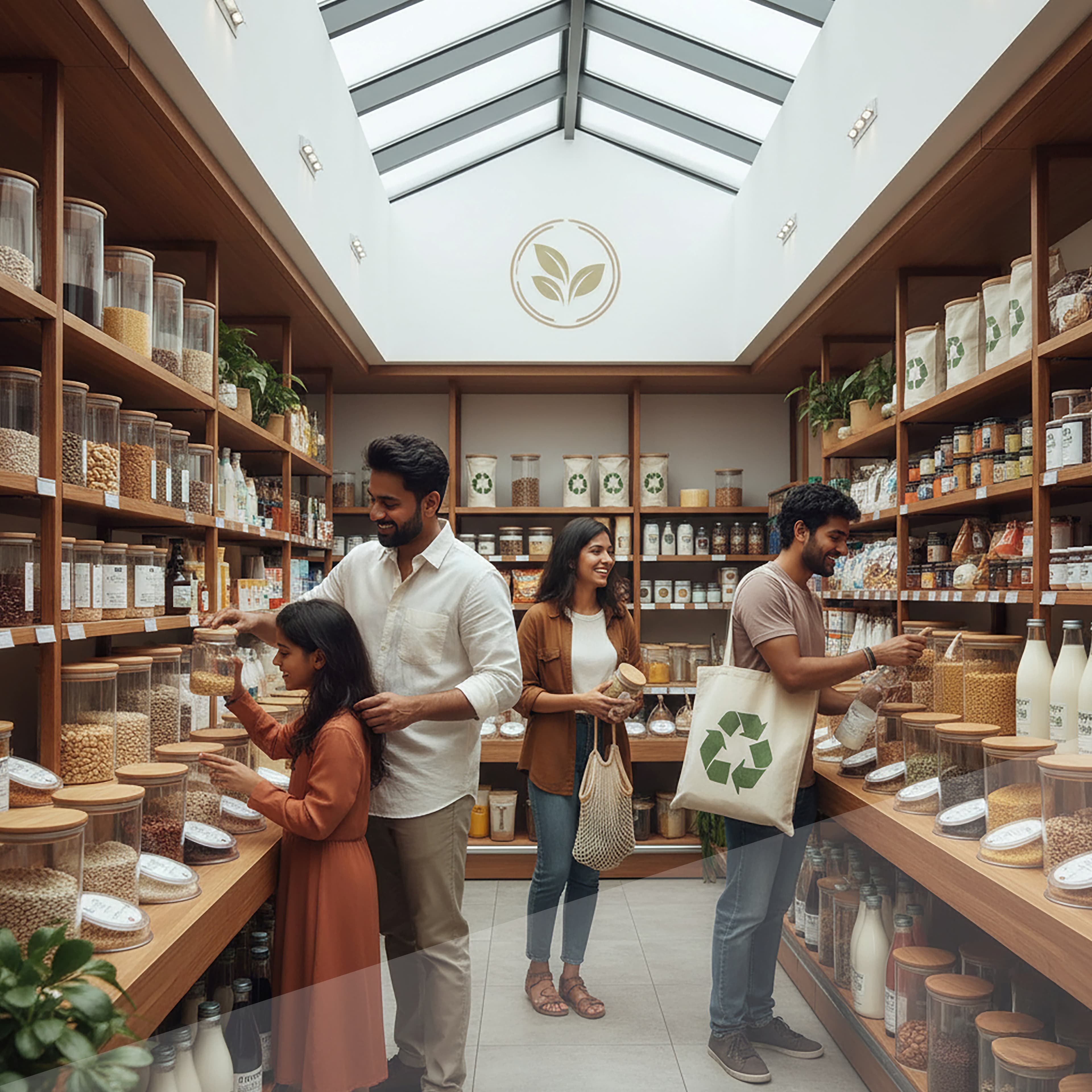
Think about it: you can shrink your carbon footprint just by getting customers to refill instead of replace. Beyond the data and metrics, reusable packaging builds something even more valuable: trust, loyalty, and a shared sense of purpose. It’s sustainability that your customers can actually hold in their hands.
Small Businesses, Big Impact
It’s not just the big names scoring points in the carbon game, small food businesses are playing hard, balancing costs and sustainability like a high-stakes juggling act.
JB rPET is dedicated to making eco friendly food packaging for small business a reality. Our low carbon packaging solutions focus on:
- Affordable, effective packaging that maximizes rPET content without compromising quality,
- Options that keep perishables fresh longer, reducing food waste as well as packaging waste,
- Making choices easier with clear insights on carbon-neutral packaging and its full lifecycle benefits. Consumers today value sustainable packaging materials, and small businesses can turn that authenticity into a competitive edge. JB rPET helps you do that without breaking the bank.
The Bigger Picture
While “zero carbon packaging” sounds excellent, the reality is complex. Carbon neutrality demands not only clever materials but transparency, verified lifecycle assessments, and carbon offset strategies.
JB rPET actively supports this transparent, data-driven approach, helping brands:
- Conduct thorough carbon-footprint analyses to understand the role of packaging and its actual environmental cost
- Identify the biggest emission hotspots. The design choices and material uses that are changed will deliver the most significant reductions.
- Ensure that every decision you make advances the larger environmental vision by aligning your packaging strategy with your business's broader sustainability objectives.
- Present believable, scientifically supported assertions to stakeholders to foster accountability and confidence.
The packaging sector is rapidly evolving. Businesses are being held more directly accountable for packaging waste and emissions as EPR requirements take effect. Early adoption of sustainable packaging gives you a competitive edge in addition to maintaining compliance.

Final Thoughts
When we talk about the role of packaging, it’s more than a box; it’s a way to drive sustainability, spark innovation, and elevate your brand.
JB rPET is proud to lead this charge with:
- An [expertise] in high-quality recycled materials,
- A focus on reducing material complexity and volume,
- Partnerships contributing towards carbon-neutral packaging, reusable, and refillable packaging models.
Let’s close the loop, not our minds. Remember: sustainable packaging solutions mark the end of old habits and a fresh start for the planet.