Clothing Recycling in India: What Happens After You Drop Off Old Clothes?
Most people who recycle clothes do it with good intent.
A cupboard clean-out. A seasonal reset. A bag of old clothes dropped off after searching for clothes recycling near me. It feels responsible, almost complete.
But for most of us, that is where the story ends.
What happens after your clothes leave your hands is rarely explained. Not clearly. Not honestly. And definitely not in a way that helps people understand how clothing recycling actually works in India today.
This is written with the intention to
change that.
Not to sell an idea. Not to overpromise outcomes.
But to walk you through what really happens inside a textile recycler’s
ecosystem.
Why Clothing Recycling Needs More Than Good Intent
India consumes and discards clothing at a massive scale. The rise of affordable fashion, blended fabrics, and synthetic materials has made clothes more accessible, but also more disposable.
Most people assume that donating or recycling clothes automatically means reuse. The reality is more complicated.
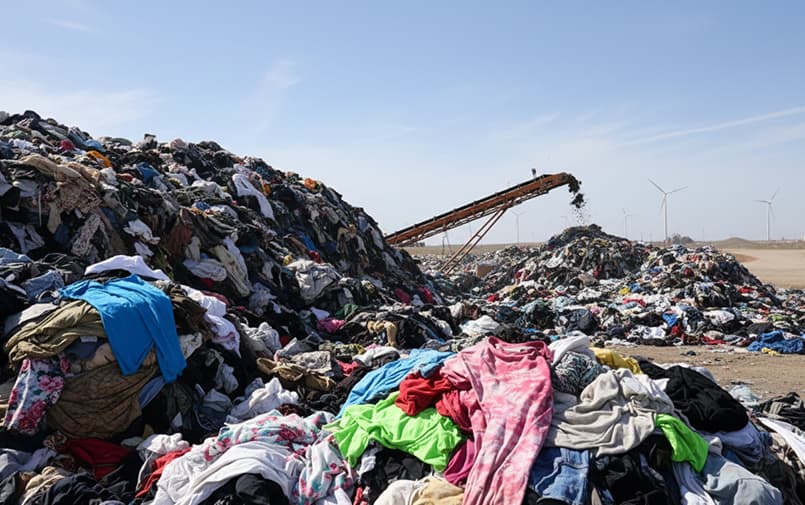
A large portion of discarded clothing today is made from polyester or blended fibres. These materials do not break down naturally and cannot be treated the same way as cotton or wool.
This is why textile waste management has become a growing concern. Without proper systems, discarded clothes either end up in landfills or are downcycled into low-value uses that delay, rather than prevent, waste. There are steps to be taken at all stages: Brands who make them as well as consumers who use them.
A professional textile recycler steps in where informal systems reach their limits.
What Really Happens When You Drop Off Old Clothes
When you search for textile recycling near me and hand over clothes, they do not go straight into recycling machines.
The first stage is evaluation.
Every batch of clothing goes through an initial assessment to determine:
- Whether the garment is reusable
- Whether it can be recycled
- Whether it is unsuitable for either
This distinction matters because textile clothing recycling is not a single process. Reuse and recycling are two different pathways, each with different environmental outcomes.
Reusable garments may be redirected to second-hand markets, charity channels, or export networks. These garments retain their form.
Recyclable garments, on the other hand, lose their original identity and enter a material recovery process.
A responsible textile recycler does not treat these paths interchangeably.
Inside a Brand Clothing Collection Program: The H&M Example
Let’s take a familiar example.
You walk into an H&M store with a bag of old clothes. They could be jeans, T-shirts, mixed fabrics, even items that are no longer wearable. You drop them into the in-store recycling box and receive a discount voucher.
From a consumer’s point of view, the process feels simple and complete.
Behind the scenes, however, the journey is far more layered.
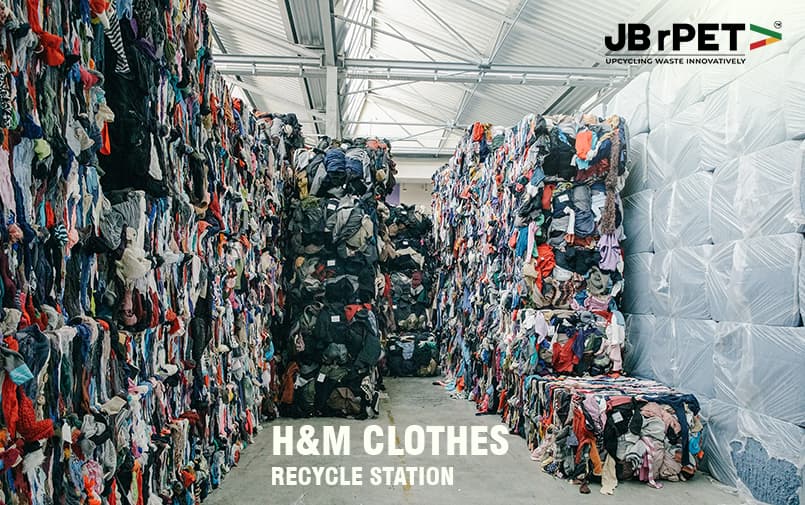
Once collected, these clothes are aggregated and sent to sorting facilities operated by H&M’s recycling partners. At this stage, the clothes are not “recycled” yet. They are first assessed and categorised.
Wearable items may be separated for reuse or resale through second-hand channels. Clothes that are damaged or unsuitable for reuse move into the textile recycling stream.
This is where the role of a textile recycler becomes central.
The recycler sorts garments based on fibre composition. Cotton, polyester, and blended fabrics are separated because each requires a different recycling approach. Polyester garments are often prioritised because recycling polyester textile waste allows recovery of durable synthetic fibres that would otherwise persist in landfills.
After sorting, recyclable garments are processed through mechanical or chemical recycling methods. The original clothing is broken down into raw material that can be used again in textile or industrial applications.
Clothes that cannot be reused or recycled responsibly are identified early and diverted toward controlled waste handling pathways, rather than being mixed into recycling streams where they could cause contamination.
So when you hand over clothes at a brand collection point like H&M, you are not directly recycling them yourself. You are handing them over to a system that relies heavily on professional textile recyclers to decide what is reused, what is recycled, and what must be responsibly exited.
This example shows why transparency and capable textile waste management systems matter. The drop-off is only the first step. The real impact depends on what happens after.
How Textile Recycling Companies Decide What Happens to Your Clothes
Once clothes enter a textile recycling system, decisions are made quickly and methodically.
Recyclers evaluate garments using criteria such as fibre composition, fabric blends, moisture content, contamination level, and physical condition. These checks determine whether a garment is suitable for reuse, mechanical recycling, chemical recycling, or responsible disposal.
For example, clean polyester garments are often prioritised because recycling polyester textile waste allows higher material recovery. Heavily blended or contaminated garments may be unsuitable for recycling and are separated early to avoid damaging the overall process.
This is why not all clothes dropped off at clothes recycling near me points follow the same path. A textile recycler applies material logic, not assumptions, to every batch.
Sorting Is the Backbone of Clothing Recycling
Sorting is where most of the real work happens and where many systems fail.
Clothes are sorted based on:
- Fibre type
- Fabric blends
- Condition
- Presence of accessories like buttons, zippers, or prints
Why is this important?
Because recycling polyester textile waste requires a very different approach than recycling cotton or viscose. Mixing fibres reduces recovery quality and increases waste during processing.
This is why large-scale textile recycling is slow to scale. It relies on careful, often manual sorting supported by mechanical aids.
A well-run textile recycler invests time and resources here, even though it is the least visible part of the process.
What a Textile Recycler Actually Does (Beyond Collection)
Most people assume that a textile recycler simply collects clothes and sends them somewhere else. In reality, collection is only the smallest part of the job.
A professional textile recycler operates like a material recovery specialist. Their responsibility starts once the clothing enters their system and continues until the material is either reused, recycled, or responsibly exited.
This includes setting up traceable collection channels, investing in sorting infrastructure, identifying recyclable versus non-recyclable textiles, and choosing the right recycling pathway for each material. It also involves quality control, contamination checks, and compliance with environmental norms.
In short, a textile recycler is not a middleman. They are the decision-maker in how textile waste is handled, processed, and recovered.
This distinction is important because the quality of textile recycling depends entirely on how experienced and transparent the recycler is.
The Complexity of Recycling Polyester Textile Waste
Polyester is both a challenge and an opportunity.
It is durable, widely used, and does not degrade easily. But it is also recyclable when handled correctly.
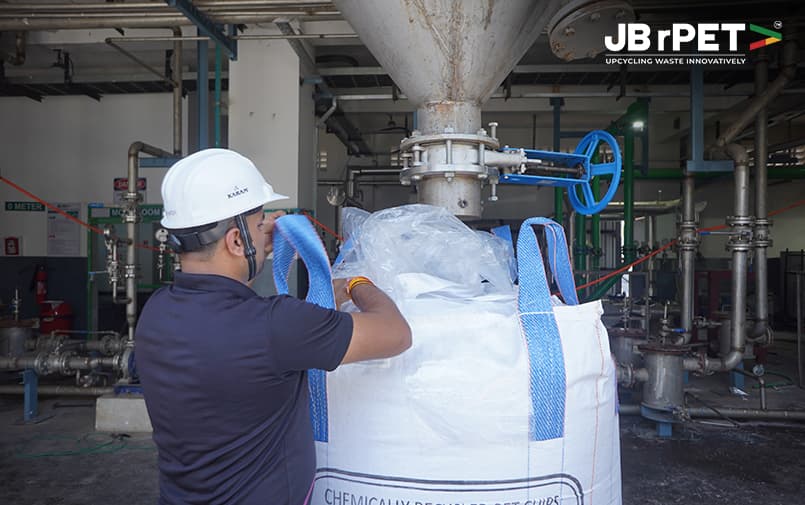
In recycling polyester textile waste, garments are broken down into fibre or raw material through mechanical or chemical processes depending on purity and contamination.
Mechanical recycling involves shredding and reprocessing fibres. Chemical recycling breaks polyester down to its molecular level, allowing higher-quality recovery. Not all polyester garments qualify. Blends, dyes, and finishes affect recyclability.
This is where expertise matters. A genuine textile recycler understands these limitations and works within them rather than promising blanket solutions.
In India, organised textile recycling is still developing, and this is where specialised recyclers like JBrPET play an important role. Instead of treating textile waste as disposal material, JBrPET focuses specifically on recycling polyester textile waste and converting it into usable raw material known as T2T resins. Their work sits at the intersection of clothing recycling and plastic recycling, helping ensure that discarded polyester garments are processed through structured, traceable systems rather than ending up in landfills or informal dumping streams.
The Role of Technology Inside Textile Recycling Facilities
Modern textile recycling is no longer dependent on manual labour alone.
Textile recycling facilities increasingly use technology for fibre identification, automated sorting support, shredding precision, and contamination control. These systems help recyclers process higher volumes without compromising material quality.
For recycling polyester textile waste, technology ensures that fibres are processed at the right consistency and purity. This improves recovery rates and reduces secondary waste.
A serious textile recycler invests in this infrastructure because textile waste management at scale cannot rely on guesswork. Technology reduces error, improves traceability, and makes recycling outcomes more predictable.
What Happens During the Recycling Process
Once sorted, garments undergo processing stages such as:
- Removal of non-textile elements
- Cleaning to eliminate contaminants
- Shredding or fibre separation
- Conversion into reusable material
The output may not look like clothing anymore. It may take the form of fibre feedstock, flakes, or industrial material ready for further use.
This is the real outcome of textile clothing recycling. Not new clothes overnight, but recovered material that reduces dependence on virgin resources.
This stage is where textile waste management shifts from waste handling to resource recovery.
Why Not All Clothes Can Be Recycled
This is one of the most misunderstood aspects of clothing recycling.
Some garments cannot be recycled due to:
- Heavy contamination
- Complex multi-layer construction
- Chemical coatings
- Excessive wear
A transparent textile recycler does not hide this reality.
These garments may be directed toward controlled co-processing or energy recovery, where permitted. This is not ideal, but it is often more responsible than landfill disposal.
Understanding this helps set realistic expectations around clothing recycling.
Common Myths About Textile Recycling That Need Clarity
There are several assumptions around clothing recycling that do more harm than good.
One common myth is that all recycled clothes become new clothes. In reality, most recycled textiles become raw material for industrial or secondary use.
Another myth is that donating clothes always means reuse. Many donated garments still enter recycling or waste streams depending on condition.
Some also assume that searching for clothes recycling near me guarantees responsible processing. Without a credible textile recycler behind the collection point, outcomes vary widely.
Understanding these realities helps set realistic expectations and encourages more informed participation in textile recycling.
Why Transparency Matters in Textile Recycling
One of the biggest gaps in clothing recycling today is transparency. Sure, brands can do their bit in contributing to textile waste management and circularity in textiles. But consumers have to play their part too.
Many consumers search for textile recycling near me without knowing where their clothes end up. Some collection points lack clear downstream partners, making outcomes uncertain.
A responsible textile recycler communicates openly about what percentage of clothing is reused, recycled, or responsibly disposed of. They acknowledge limitations instead of making blanket claims.
Transparency builds trust and ensures that clothing recycling does not become a feel-good exercise with unclear impact.
For end users, asking questions and choosing transparent recyclers strengthens the entire textile clothing recycling ecosystem.
The Current State of Clothing Recycling in India
India’s recycling ecosystem is still uneven.
While informal reuse systems are strong, organised recycling capacity is limited. Many people search for clothes recycling near me without knowing whether the collection point connects to a real recycling facility.
At present, India is seeing:
- Increased awareness among consumers
- Growing focus on synthetic textile waste
- Limited but expanding professional recycler capacity
- Greater emphasis on traceability and compliance
A structured textile recycler bridges the gap between intent and impact.
Your Role as an End User Matters
Clothing recycling is not passive.
You influence outcomes by:
- Keeping clothes clean and dry before recycling
- Avoiding mixing textiles with household waste
- Asking where collected clothes are processed
- Supporting recyclers who are transparent
Small actions improve sorting efficiency and recovery quality.
Every responsible choice supports better textile waste management outcomes.
Why Textile Recycling Is About Systems, Not Single Actions
Dropping off clothes is not the end. It is the beginning of a chain that depends on sorting, processing, and recovery infrastructure.
A reliable textile recycler operates within this system with one goal. Reduce waste while extracting value responsibly.
This is why clothing recycling should be understood as a process, not a promise.
How Textile Recycling Supports Long-Term Sustainability
Textile recycling plays a long-term role in reducing dependency on virgin fibres, lowering environmental impact, and improving textile waste management systems.
By recovering usable material from discarded clothes, a textile recycler reduces landfill load, energy consumption, and resource extraction.
Recycling polyester textile waste is especially impactful because it keeps plastic-based fibres in circulation instead of allowing them to degrade into microplastics.
When supported by informed consumers, transparent recyclers, and proper infrastructure, textile clothing recycling becomes a measurable sustainability solution rather than a symbolic gesture.
What You Drop Off Does Not Disappear
The next time you search for textile recycling near me, remember that your clothes enter a complex system.
Some are reused. Some are recycled. Some reach their end responsibly.
Understanding this journey helps build trust and accountability. This is how circular fashion truly closes the loop.
And that is how clothing recycling in India can actually work.