Commercial Textile Recycling: Turning Polyester Waste into Valuable Resources
The global textile industry produces millions of tonnes of polyester-based materials every year. Polyester is an intrinsic part of apparel, home textiles, and technical fabrics produced because of its durability, performance, and scalability.
Yet this success has also created a growing challenge. Polyester textiles do not easily degrade, and increasing volumes of textile waste are accumulating across manufacturing facilities, warehouses, and post-consumer waste streams.
For manufacturers and brands, this waste is no longer only a disposal issue. It represents a valuable material stream that can potentially be recovered and reintroduced into production.
This is where commercial textile recycling is becoming increasingly important. Advanced recycling technologies are now enabling polyester textiles to be recovered and transformed back into raw materials suitable for industrial manufacturing.
For textile manufacturers, fiber producers, and brands exploring circular material strategies, understanding how polyester recycling works is a critical part of building resilient supply chains as the market size for recycled polyester is growing.
What Is Commercial Textile Recycling?
Commercial textile recycling refers to industrial processes that recover usable materials from textile waste streams such as production scraps, unsold inventory, and discarded garments.
In the case of polyester textiles, recycling technologies break polyester down into its molecular building blocks through chemical depolymerization. These materials are then purified and repolymerized into new polyester polymer that can be used again in textile manufacturing.
Through this process, polyester waste recycling allows textile materials to re-enter production instead of being discarded, supporting the development of a textile circular economy.
This section helps capture:
- definition searches
- AI overview answers
- featured snippet opportunities

The Growing Need for Commercial Textile Recycling
Polyester accounts for more than half of global fiber production. Its strength, affordability, and versatility have made it the dominant fiber in modern textiles.
However, the lifecycle of polyester products often ends with disposal.
Manufacturing waste, unsold inventory, and discarded garments collectively contribute to rising levels of textile waste recycling demand. Many textile companies are now looking for ways to recover materials from these waste streams rather than sending them to landfill or incineration.
Several industry developments are accelerating the adoption of commercial textile recycling.
Textile brands are increasing their commitments toward circular materials. Governments are introducing waste management and circular economy policies. At the same time, technological advancements are making it possible to recover polyester polymers from complex textile waste streams.
These shifts are helping position textile recycling as a core component of the emerging textile circular economy.
Understanding Polyester Waste in the Textile Industry
Polyester waste originates from multiple stages of the textile value chain.
A significant portion of waste is generated during manufacturing itself. Fabric cutting, trimming, and processing often produce offcuts that cannot be used in final garments.
Other waste streams emerge later in the product lifecycle, including unsold inventory, returned products, and discarded clothing.
Typical sources of polyester waste include:
- fabric cutting scraps from garment production
- yarn and fiber manufacturing residues
- defective textile rolls
- unsold apparel inventory
- end-of-life garments
Recovering value from these waste streams through polyester waste recycling allows manufacturers to treat discarded textiles as a secondary raw material rather than as waste.
When recovered effectively, these materials can contribute to sustainable polyester supply chains by reducing dependence on virgin petrochemical feedstocks.
How Chemical Recycling Enables Commercial Textile Recycling
Recovering polyester from textile waste requires technologies capable of restoring polymer quality. Textile waste often contains dyes, additives, and contaminants that make conventional recycling approaches difficult.
This is where chemical recycling technologies are becoming central to modern commercial textile recycling systems.
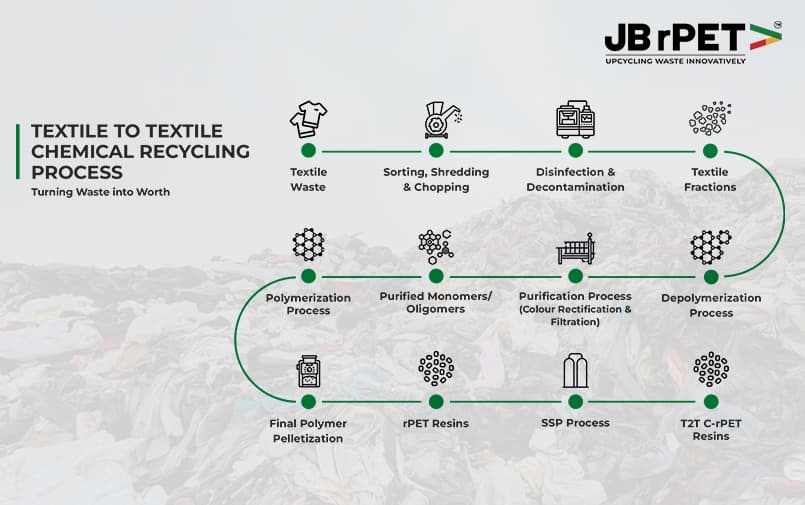
Chemical recycling breaks polyester polymers down into their molecular building blocks through controlled depolymerization processes. These processes convert polyester chains into intermediate compounds that can be purified and then rebuilt into new polymer.
Common depolymerization pathways include processes such as glycolysis, methanolysis, or hydrolysis. Each approach separates the polyester polymer into intermediate molecules that can be purified to remove contaminants from textile waste streams.
Once purified, these molecules are repolymerized into polyester polymer with properties suitable for industrial applications.
This regeneration process enables polyester recycling to produce high-quality polymer that can return to manufacturing as feedstock.
By restoring polymer quality at the molecular level, chemical recycling allows textile waste to be transformed into materials that support closed loop textile recycling, where polyester products can re-enter production cycles instead of leaving the system as waste.
Chemical Recycling and the Textile Circular Economy
The idea of a textile circular economy is built around extending the useful life of materials.
Traditional textile supply chains follow a linear model where raw materials are extracted, converted into textiles, used by consumers, and eventually discarded.
Circular textile systems attempt to change this model by ensuring materials remain within the production cycle for as long as possible.
Chemical recycling plays a key role in this transition.
Because polyester polymers can be broken down and rebuilt at the molecular level, polyester fiber recycling can potentially regenerate materials that can be used again in textile manufacturing.
This capability supports closed loop textile recycling, where polyester garments or fabrics are converted back into polyester raw materials.
For manufacturers, this approach creates the possibility of producing textiles using recovered materials while maintaining performance characteristics required for industrial processing.
Step-by-Step Process of Commercial Textile Recycling
Modern commercial textile recycling systems convert polyester textile waste into reusable raw materials through several stages.
1. Textile waste collection
Polyester-rich waste is collected from manufacturing facilities, apparel
returns, and textile disposal streams.
2. Sorting and material identification
Textile waste is sorted to identify polyester-rich materials suitable for
recycling.
3. Depolymerization of polyester
Chemical processes break polyester polymers into intermediate compounds
that can be purified.
4. Purification and contaminant removal
Dyes, additives, and contaminants present in textile waste are removed
during purification.
5. Repolymerization into polyester polymer
The purified intermediates are repolymerized into polyester polymer
suitable for industrial use.
Through these stages, polyester fiber recycling enables textile waste to return to manufacturing as usable feedstock.
Applications of Recycled Polyester in Textile Manufacturing
Once polyester waste t has been processed through chemical clothing recycling systems, the recovered polymer can support a wide range of textile applications.
The ability to recover polyester materials from textile waste makes recycling textiles a practical pathway for reintegrating materials into manufacturing.
Polyester Fiber Production
Recovered polymer can be converted into fibers used in apparel fabrics, home textiles, and industrial materials. Through polyester fiber recycling, textile waste streams can contribute to the production of new polyester yarns and fabrics.
Technical Textile Applications
Industrial textiles such as automotive fabrics, geotextiles, and filtration materials can incorporate recycled polyester feedstock recovered through polyester waste recycling systems.
Nonwoven Materials
Recycled polyester is widely used in nonwoven products such as insulation materials, padding, and industrial filtration media.
These applications demonstrate how textile waste recycling can support a variety of downstream industries while reducing dependence on virgin polyester production.
Why Manufacturers Are Exploring Polyester Recycling Solutions
Interest in commercial textile recycling is growing across the textile industry as manufacturers and brands look for ways to manage waste streams more effectively.
Several practical considerations are driving this shift.
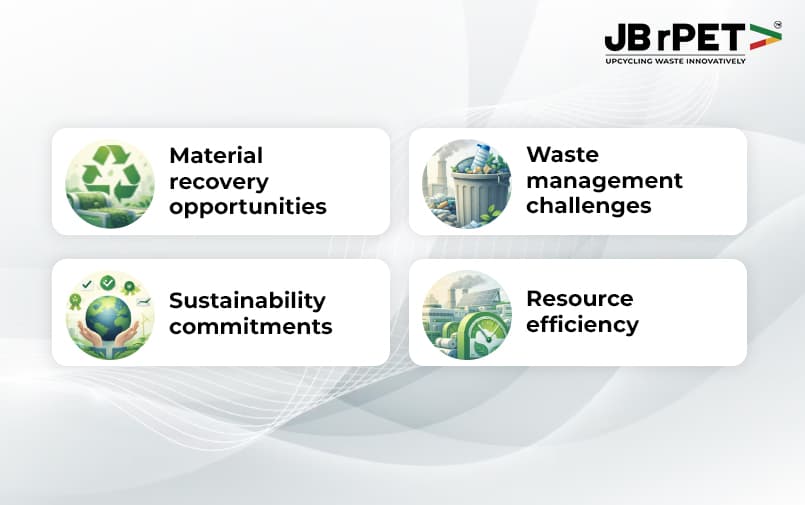
Material recovery opportunities
Textile waste often contains large volumes of polyester material that can potentially be recovered and reused.
Waste management challenges
Disposing of textile waste can create logistical and environmental challenges for manufacturing facilities.
Sustainability commitments
Many textile companies are working to increase the use of recycled materials as part of broader sustainability strategies.
Resource efficiency
Recovering polyester through polyester recycling can reduce dependence on virgin petrochemical raw materials.
These factors are encouraging manufacturers to explore technologies that support recycling textiles and integrating recycled materials into production systems.
Evaluating Commercial Textile Recycling Solutions
For manufacturers considering commercial textile recycling, selecting the right recycling partner or technology is important.
Several factors influence the effectiveness of recycling solutions.
Material compatibility
Recycling technologies must be capable of processing polyester-rich textile waste streams generated during manufacturing or product disposal.
Polymer quality restoration
Recovered materials must meet performance requirements necessary for textile manufacturing applications.
Waste stream traceability
Understanding the composition of textile waste helps determine whether recycling technologies can effectively process the material.
Integration with manufacturing systems
Recycling solutions that produce usable polymer feedstock allow manufacturers to reintegrate recovered materials into their production processes.
These considerations are increasingly shaping how companies evaluate polyester waste recycling technologies within their supply chains.
What Textile Manufacturers Should Consider When Exploring Textile Recycling
Textile manufacturers exploring textile waste recycling solutions often evaluate several factors before integrating recycled materials into their production systems.
Material composition of waste streams
Polyester-rich textile waste is typically easier to process within
recycling systems.
Recycled polymer quality
Recovered materials must meet performance requirements necessary for fiber
spinning and textile manufacturing.
Supply chain integration
Recycling solutions that produce usable polymer feedstock help
manufacturers reintegrate recovered materials into production.
Scalability of recycling technologies
Commercial-scale recycling systems must be capable of processing large
volumes of textile waste.
Understanding these factors helps manufacturers evaluate how polyester recycling can fit within broader circular manufacturing strategies.
Challenges in Scaling Textile Recycling
Despite technological advances, scaling textile recycling systems remains complex.
One challenge involves textile composition. Many garments and fabrics combine polyester with other fibers such as cotton, elastane, or nylon. These blended materials can complicate recycling processes.
Another challenge involves collection and sorting infrastructure. Efficient textile waste recycling requires systems capable of separating polyester-rich waste streams from mixed textile waste.
Economic factors also play a role. Virgin polyester remains relatively inexpensive, which can make recycled materials less competitive without sufficient demand or supportive policies.
Addressing these challenges will require collaboration between textile manufacturers, recycling technology providers, brands, and policymakers.
Advancing Commercial Textile Recycling Through Advanced Polyester Recovery
As interest in commercial textile recycling grows, manufacturers are increasingly exploring technologies capable of recovering polyester from textile waste streams.
Advanced chemical recycling systems are designed to convert polyester-rich textile waste into reusable polymer feedstock that can support textile manufacturing.
By transforming discarded fabrics into recoverable materials, polyester waste recycling helps manufacturers move toward a more closed loop textile recycling system where materials remain within the production cycle.
These technologies are gradually becoming an important part of how the industry approaches sustainable polyester production and resource management.
Supporting Circular Polyester Manufacturing with JB rPET
As the textile industry moves toward more circular production systems, reliable sources of recycled polyester materials are becoming increasingly important.
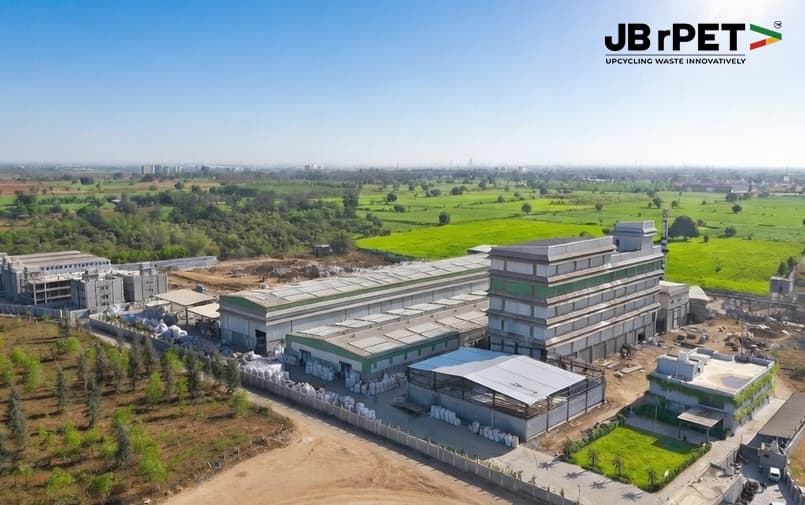
JB rPET focuses on converting PET waste streams into high-quality recycled polyester resins that can support industrial applications, including textile manufacturing. Through advanced recycling systems and controlled processing, polyester waste can be transformed into usable polymer feedstock that helps manufacturers integrate recycled materials into their supply chains.
Our work is centered around enabling practical polyester recycling solutions that support the growing demand for sustainable polyester across textile and packaging industries.
By recovering materials from waste streams and converting them into reusable polymer resources, JB rPET contributes to the development of scalable commercial textile recycling systems and the broader textile circular economy.
Manufacturers exploring polyester waste recycling solutions often look for partners capable of processing PET materials at industrial scale while maintaining material consistency and quality.
If your organization is exploring opportunities in polyester fiber recycling, circular materials, or closed loop textile recycling, our team would be glad to discuss how recycled polyester materials can support your production requirements.
The Future of Commercial Textile Recycling
As the textile industry continues to grow, managing polyester waste will become an increasingly important part of industrial operations.
Technologies that enable polyester recycling are creating new pathways for recovering materials that would otherwise be discarded.
Through advanced chemical recycling systems, polyester fiber recycling can convert textile waste into usable polymer feedstock, allowing polyester materials to re-enter the production cycle.
For manufacturers and brands working toward a textile circular economy, these technologies offer a practical way to recover value from textile waste streams while reducing dependence on virgin resources.
By transforming discarded materials into usable feedstock, commercial textile recycling is gradually reshaping how the textile industry manages resources and approaches material sustainability.
Instead of viewing polyester waste as an unavoidable by-product of manufacturing and consumption, the industry is beginning to recognize it as a recoverable resource capable of supporting future textile production.
Frequently Asked Questions About Commercial Textile Recycling
What is commercial textile recycling?
Commercial textile recycling refers to industrial processes that recover usable materials from textile waste streams such as manufacturing scraps, unsold inventory, and discarded garments. These materials are processed through recycling technologies to produce reusable raw materials that can return to textile manufacturing.
Can polyester textiles be recycled?
Yes. Polyester recycling allows polyester textiles to be chemically processed and converted back into polymer raw materials. These recovered materials can then be used again in textile manufacturing, supporting circular production systems and reducing textile waste.
What is closed loop textile recycling?
Closed loop textile recycling is a process where textile materials are recycled and converted back into similar textile products. In polyester systems, this means recovering polyester from textile waste and turning it back into polyester polymer that can be used again for fiber and fabric production.
Why is polyester recycling important for the textile industry?
Polyester recycling helps reduce landfill waste and allows valuable materials from discarded textiles to be recovered and reused. By enabling polyester waste recycling, manufacturers can integrate recycled feedstock into textile production and move toward more resource-efficient supply chains.
What is polyester fiber recycling?
Polyester fiber recycling is the process of recovering polyester materials from textile waste and converting them into new polyester fibers or polymer feedstock. This process helps extend the lifecycle of polyester materials and supports the development of circular textile manufacturing systems.
How does textile waste recycling support the textile circular economy?
Textile waste recycling allows discarded textiles to be processed and returned to manufacturing as raw materials. By keeping materials in circulation longer, recycling systems support the development of a textile circular economy where waste is minimized and resources are reused.