Can Textile-to-Textile Recycling Reduce Fast Fashion Waste?
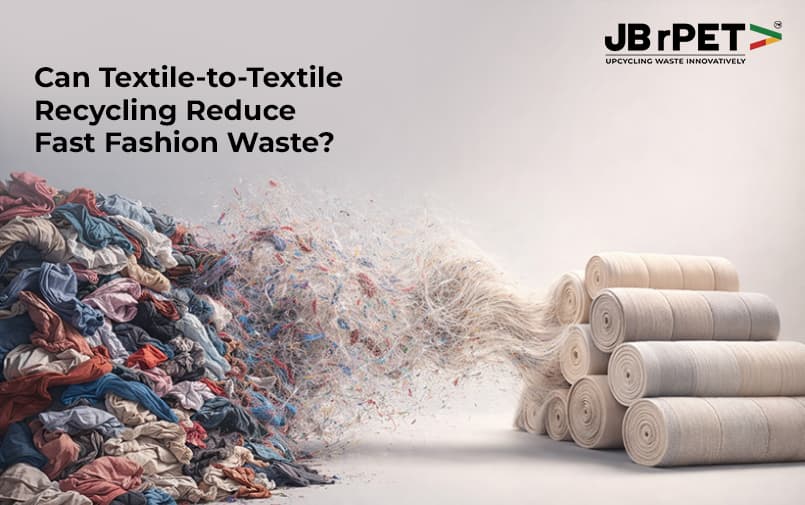
The fashion industry has always moved in cycles. Trends return. Silhouettes revive. Fabrics reappear.
But waste? Waste has only moved in one direction. Up.
From the perspective of a company working every day in textile recycling, the question is no longer whether fast fashion creates waste. That answer is obvious. The real question is this:
Can textile-to-textile recycling realistically reduce fast fashion waste at scale?
The answer is not simple. But it is possible.
Let’s examine the scale of the crisis, the technical realities of textile recycling, and whether a circular system can genuinely disrupt the fast fashion model.
The Scale of the Crisis: Why Textile Recycling Has Become Urgent
Before discussing solutions, we need to understand the scale.
Recent global estimates show that 92–120 million tonnes of textile waste are generated every year. Projections indicate this could exceed 134–150 million tonnes annually by 2030 if current trends continue.
To put it bluntly:
It has been described as a garbage truck of textiles landfilled or burned
every second.
Key numbers that shape our industry:
- Around 80–87% of textile waste is landfilled or incinerated
- Only 12–20% is collected for reuse or recycling
- Less than 1% of used clothing is recycled back into new fibers for new garments
That last number is the most critical. True circular textile recycling into new apparel is almost non-existent at scale.
From a recycler’s perspective, that is not just an environmental problem. It is a systems failure.
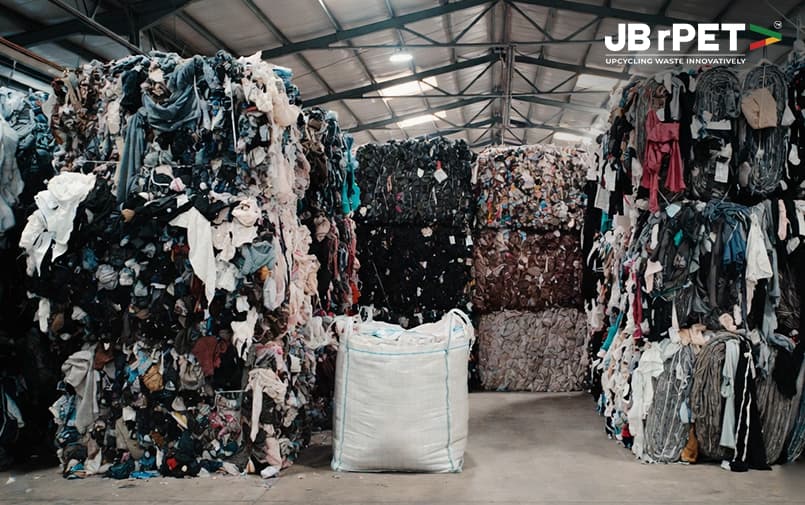
Understanding the Fast Fashion Environmental Impact
The fast fashion environmental impact extends far beyond landfill space.
Textile production and disposal are linked to 3–8% of global greenhouse gas emissions, and the sector is often cited as responsible for around 10% of global emissions depending on methodology. It also accounts for significant water use, estimated at around 93 billion cubic meters annually, and nearly 20% of industrial wastewater globally.
Then there is microfiber pollution:
- Around 500,000 tonnes of microfibers enter oceans every year from washing clothes
- A single polyester load can release up to 700,000 microplastic fibers
The impact of fast fashion on environment is not limited to discarded garments. It begins at fiber production, continues through dyeing, washing, transportation, and ends in landfill or incineration.
As a textile recycling company, we see the final stage of that chain. But we understand the full lifecycle.
The real issue is linearity.
Make. Sell. Wear briefly. Discard.
Unless textile recycling becomes structurally integrated into production models, this linear system will not change.
Textile Recycling Today: Where We Actually Stand
When people hear “textile recycling,” many assume garments are being efficiently transformed into new clothes. That is rarely the case.
In 2024:
- About 80% of global textile waste was landfilled or incinerated
- 12% was reused
- Only 7% was technically suitable for recycling
- Under 1% became new fiber
Most so-called recycling is downcycling. Old garments become wiping rags, insulation, stuffing, or low-grade applications.
True textile to textile recycling, where fibers are recovered and spun back into apparel-grade yarn, remains technically challenging.
From our operational perspective, the barriers include:
- Fiber blends such as cotton-polyester mixes
- Contamination from dyes and finishes
- Inconsistent waste sorting
- Lack of scalable chemical recovery infrastructure
This is where investment in advanced textile recycling technologies becomes critical.
Design for Recycling: The Shift Fast Fashion Must Make
One of the most overlooked barriers to scalable textile recycling is garment design itself.
Today’s apparel often contains:
- Multi-fiber blends
- Mixed trims and accessories
- Complex dye and finish systems
- Laminations and coatings
These design decisions complicate clothing recycling and reduce fiber recovery efficiency.
If brands want to genuinely reduce the impact of fast fashion on environment, design must evolve toward recyclability. That means:
- Reducing blended fiber ratios
- Standardizing trims
- Improving fiber labeling
- Supporting mono-material construction
Without design reform, even the most advanced textile recycling facilities will operate below optimal recovery rates.
Circularity does not begin at waste. It begins at design. Thus, design for sustainability plays a major role.
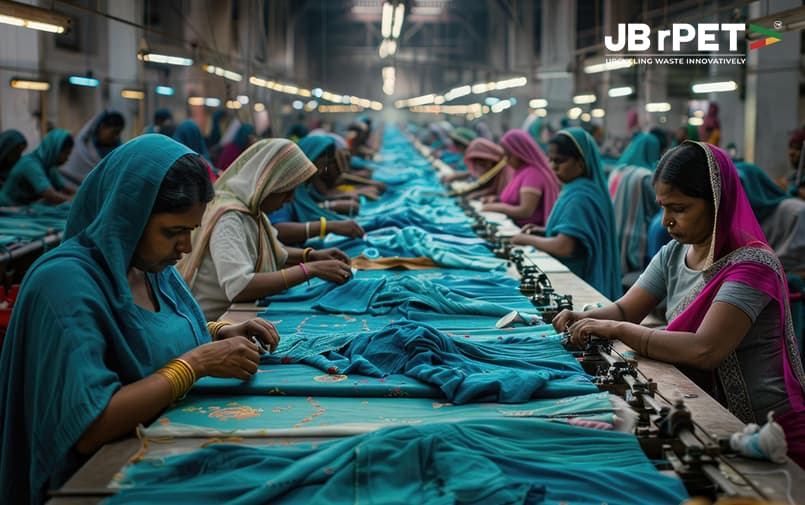
India’s Textile Waste Landscape: A System in Transition
India generates approximately 7.8–8 million tonnes of textile waste annually, representing around 8.5% of global textile waste.
Breakdown:
- 51% pre-consumer waste (mill and factory waste)
- 42% domestic post-consumer waste
- 7% imported post-consumer waste
Encouragingly, around 59% of textile waste in India is reused or recycled, including informal sector recovery and downcycling. However, about 43% of domestic post-consumer waste still ends up in landfill, compared to only ~1% of pre-consumer waste.
Manufacturing scrap alone contributes approximately 650,000 tonnes per year.
For a textile recycling company operating in India, this is both a challenge and an opportunity. Pre-consumer waste is cleaner and easier to process. Post-consumer clothing recycling is more complex but essential if we want to reduce fast fashion waste.
The Polyester Problem: Why Textile Recycling Must Focus on Synthetics
While cotton waste receives significant attention, the reality of modern fashion is different. Polyester dominates global apparel production. Fast fashion relies heavily on synthetic fibers because they are inexpensive, durable, and versatile.
This is where advanced textile recycling becomes critical.
Polyester garments contribute significantly to the fast fashion environmental impact due to fossil-based production and microfiber shedding. Every synthetic garment that is landfilled represents both material loss and embedded carbon emissions.
Unlike natural fibers, polyester can theoretically be recycled multiple times through chemical depolymerization. This makes it one of the most promising materials for true textile to textile recycling at scale.
If we want to meaningfully reduce fast fashion waste, we must prioritize polyester-based textile recycling systems that allow fiber regeneration without quality loss.
From an infrastructure standpoint, synthetic-focused textile recycling is not optional. It is essential.
Textile to Textile Recycling: The Circular Promise
True textile to textile recycling is the process of converting old garments into new fibers suitable for spinning into fresh textiles.
It differs from general clothing recycling or garment recycling in one critical way:
It aims to create virgin-quality fiber equivalents.
Technologies fall into two primary categories:
1. Mechanical recycling
2. Chemical recycling
Mechanical recycling works well for pure cotton or polyester stream. Chemical methods can depolymerize polyester, allowing re-polymerization or regeneration.
For fast fashion, where polyester dominates, chemical textile recycling offers real potential.
But potential is not the same as scale.
Why Fast Fashion Waste Keeps Growing
To understand whether textile recycling can reduce fast fashion waste, we must examine why waste continues to grow.
Drivers include:
- Ultra-short product cycles
Low price points
- Overproduction
- Consumer impulse buying
- Low perceived garment value
The fast fashion environmental impact is amplified because garments are worn fewer times than ever before.
In many markets, clothing utilization has declined by nearly 40% compared to two decades ago.
When a garment is designed to be disposable, textile recycling becomes a downstream correction mechanism rather than a preventive solution.
Textile Recycling vs. Clothing Recycling: A Critical Distinction
Many consumers believe donating clothes equals recycling. That is often not accurate.
Clothing recycling systems rely heavily on:
- Sorting
- Resale
- Export markets
- Downcycling
True circular textile recycling requires:
- Fiber identification
- Advanced separation
- Industrial scale reprocessing
- Brand integration
The term clothing recycling is often used loosely. But without textile-to-textile capability, we are not closing the loop.
Textile Waste Management: The Missing Infrastructure Layer
Even the best recycling technology fails without effective textile waste management systems.
Challenges include:
- Lack of standardized collection systems
- Inconsistent fiber labeling
- Informal sector dominance
- Limited traceability
In India, informal networks play a major role in textile waste management. While highly efficient in recovery and reuse, integration with advanced textile recycling infrastructure remains limited.
To reduce fast fashion waste, we need:
- Structured collection channels
- Extended producer responsibility frameworks
- Brand participation
- Consumer education
Without these, textile recycling operates below its potential.
Can We Recycle Old Clothes at Scale?
Consumers frequently ask howto recycle old clothes responsibly.
From an industry standpoint, scaling the ability to recycle old clothes requires:
- Clean material streams
- Fiber purity
- Investment in chemical recovery plants
- Brand-level take-back programs
Blended fabrics remain the biggest obstacle. A cotton-polyester blend is technically recyclable, but separation is capital intensive.
For textile recycling to reduce fast fashion waste meaningfully, brands must design for recyclability from the start.
Design decisions today determine recyclability tomorrow.
Textile Waste Statistics That Shape Industry Decisions
For strategic planning, textile waste statistics matter.
Global context:
- 92–120 million tonnes generated annually
- 134–150 million tonnes projected by 2030
- Less than 15% recycled in any form
- Under 1% recycled into new garments
United States:
- 17 million tons annually
- Recycling rate around 14.7%
European Union:
- 6.95 million tonnes in 2020
- Approximately 16 kg per person
China:
- Around 20 million tonnes annually
- 7.8–8 million tonnes annually
These textile waste statistics are not abstract. They determine capacity planning, plant investments, and technology selection in our textile recycling operations.
The Role of Garment Recycling in a Circular System
Garment recycling often focuses on extending product life.
Resale and reuse are valuable. They reduce demand for virgin production. But resale markets eventually saturate.
When a garment can no longer be reused, textile recycling must take over.
Effective garment recycling programs must integrate with fiber recovery facilities. Otherwise, garments simply move from one market to another before reaching landfill.
The Technical Reality: What Textile Recycling Can and Cannot Do
As a textile recycling company, we must be honest.
Textile recycling can:
- Recover polyester through depolymerization
- Regenerate cellulose fibers
- Reduce virgin raw material dependency
- Lower emissions compared to virgin production
Textile recycling cannot:
- Offset unlimited overproduction
- Eliminate fast fashion waste alone
- Compensate for poor garment design
The impact of fast fashion on environment will not disappear unless production volumes stabilize.
Recycling is necessary. But reduction is equally critical.
How to Reduce Fast Fashion Waste Beyond Recycling
When brands ask us how to reduce fast fashion waste, our response includes multiple layers:
1. Design for recyclability
2. Reduce blended materials
3. Implement take-back programs
4. Invest in textile recycling infrastructure
5. Improve textile waste management systems
Recycling must be integrated upstream, not treated as an afterthought.
True fashion circularity requires systemic change.
The Economics of Textile Recycling
One barrier to scale is cost.
Virgin polyester remains cheap due to fossil fuel economics. Until regulatory or carbon pricing mechanisms change this imbalance, textile recycling must compete economically.
However:
- Resource volatility
- Regulatory pressure
- ESG mandates
- Brand reputation risks
are increasingly shifting financial models.
When landfill costs rise and consumer awareness grows, textile recycling becomes economically competitive.
Policy and Producer Responsibility: The Regulatory Push Behind Textile Recycling
Regulatory pressure is beginning to reshape global textile waste management systems.
Across multiple markets, Extended Producer Responsibility frameworks are emerging that require brands to account for post-consumer textile waste. This fundamentally changes the economics of garment recycling and clothing recycling.
When producers are financially responsible for end-of-life management, textile recycling becomes integrated into supply chains rather than treated as a voluntary sustainability initiative.
In India, where approximately 7.8 million tonnes of textile waste are generated annually, structured textile waste management policies could significantly accelerate circular textile recycling infrastructure.
Regulation alone will not solve fast fashion waste. But policy alignment with textile recycling capacity can accelerate transformation as reflected in the present global textile recycling trends.
Is Textile-to-Textile Recycling Enough?
Returning to the central question:
Can textile-to-textile recycling reduce fast fashion waste?
Yes, but only under specific conditions:
- High collection rates
- Fiber traceability
- Design standardization
- Brand accountability
- Policy enforcement
Without these, textile recycling remains limited in scope.
With them, it becomes transformative.
A Realistic Outlook for 2030
If projections reach 150 million tonnes annually by 2030, even doubling textile recycling capacity will not solve the crisis alone.
However, scaling textile to textile recycling could:
- Reduce virgin polyester demand
- Lower emissions intensity
- Cut landfill dependency
- Support circular business models
The goal is not perfection. It is directional correction.
Case in Point: The Role of Advanced Polyester Recycling in Circular Textiles
As textile recycling companies working within India’s synthetic fiber ecosystem, we understand that circularity is not theoretical.
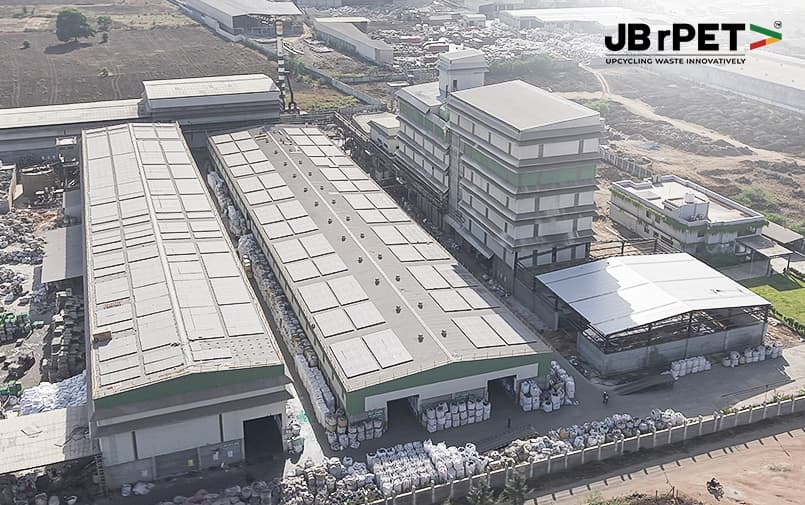
At JB rPET, the focus has been on recovering post-consumer polyester through advanced chemical processes that enable polymer regeneration suitable for textile-grade applications. Rather than downcycling, the goal is to restore material integrity so it can re-enter the textile value chain.
This approach directly addresses the fast fashion environmental impact linked to polyester production. By enabling high-quality recycled polymer suitable for spinning and weaving, circular textile recycling becomes technically viable at scale.
The broader textile recycling ecosystem depends on such infrastructure:
- Collection and sorting
- Polymer recovery
- Fiber regeneration
- Reintegration into garment manufacturing
When textile recycling capacity aligns with manufacturing demand, the industry moves closer to true textile to textile recycling rather than incremental garment recycling.
Circularity is not achieved through slogans. It is built through plants, processes, and partnerships.
Can Textile Recycling Keep Up With Fast Fashion?
From inside the industry, textile recycling is not a trend. It is infrastructure.
It is capital intensive. Technically complex. Operationally demanding.
But it is also necessary.
Fast fashion waste will not disappear through consumer awareness alone. Nor through resale apps alone.
It will reduce only when:
- Textile recycling becomes embedded into manufacturing
- Textile waste management becomes structured
- Brands design garments for circularity
- Consumers participate in structured clothing recycling systems
The fast fashion environmental impact is measurable. So must be our response.
Textile to textile recycling offers one of the few scalable pathways toward genuine circularity.
The question is no longer whether we can afford to invest in textile recycling.
It is whether we can afford not to. To make the transition in your operations and incorporate recycled polyester, talk to our team.
Common Questions About Textile Recycling and Circular Fashion
1. What is textile recycling and how does it work?
Textile recycling is the process of recovering used garments, factory scrap, and textile waste and converting them into reusable materials. Depending on the fiber type, textile recycling can involve mechanical shredding or chemical processing to regenerate fibers or polymers. True textile to textile recycling enables old garments to become raw material for new textile production, reducing dependence on virgin resources.
2. Can textile-to-textile recycling really reduce fast fashion waste?
Textile to textile recycling has the potential to significantly reduce fast fashion waste, especially for polyester-based garments. However, it must be supported by high collection rates, proper textile waste management systems, and garment design optimized for recyclability. Recycling alone cannot offset overproduction, but it can reduce landfill dependency and lower raw material extraction.
3. What happens to clothes that are not recycled?
Globally, around 80–87% of textile waste is landfilled or incinerated. Only a small percentage is reused or processed through clothing recycling systems. Less than 1% of used clothing is recycled into new fibers for garments. Without scalable textile recycling infrastructure, most discarded clothing contributes directly to environmental pollution.
4. How can consumers recycle old clothes responsibly?
Consumers can recycle old clothes through brand take-back programs, certified textile collection points, and organized clothing recycling initiatives. However, the effectiveness of recycling depends on fiber composition and sorting quality. Choosing garments designed for recyclability also increases the likelihood that textile recycling can recover material efficiently.
5. Why is fast fashion harmful to the environment?
The fast fashion environmental impact includes high greenhouse gas emissions, heavy water consumption, chemical pollution, and large-scale textile waste generation. Textile production and disposal contribute between 3–8% of global emissions, and significant volumes of microfibers enter oceans each year. The impact of fast fashion on environment intensifies when garments are worn only a few times before disposal.
6. What is the difference between clothing recycling and textile recycling?
Clothing recycling often focuses on reuse and resale. Textile recycling refers to recovering fiber or polymer material from waste textiles and converting it back into raw input for new production. Textile to textile recycling represents the highest level of circularity, where garments become new garments through fiber regeneration.
7. How much textile waste is generated globally each year?
Current textile waste statistics estimate between 92 and 120 million tonnes of textile waste are generated annually worldwide. Projections suggest this could reach 134–150 million tonnes per year by 2030 if consumption patterns remain unchanged. Less than 15% of textile waste is recycled in any form.
8. What role does textile waste management play in circular fashion?
Effective textile waste management ensures proper collection, sorting, and channeling of textile waste into reuse or recycling streams. Without structured textile waste management systems, valuable material is lost to landfill. Integrated waste management infrastructure is essential for scaling textile recycling and reducing fast fashion waste.
9. Is polyester recyclable in textile recycling systems?
Yes, polyester is one of the most promising materials for advanced textile recycling. Through chemical processes, polyester can be depolymerized and regenerated into new polymer suitable for textile applications. This makes polyester critical to large-scale textile to textile recycling initiatives aimed at reducing fast fashion waste.
10. Is recycling enough to solve the fast fashion problem?
Recycling is essential but not sufficient. To truly reduce fast fashion waste, the industry must combine textile recycling with responsible production volumes, better garment design, and structured textile waste management systems. Circularity requires systemic change across the value chain.