The Expanding Role Of rPET Flakes Across Industries And Future Chemical Recycling Systems
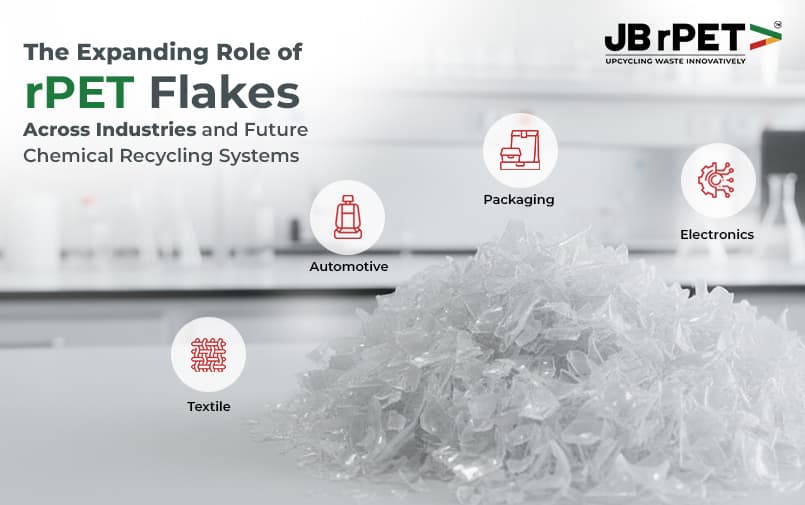
Industrial change rarely announces itself loudly. It settles in through incremental decisions, evolving standards, and a growing alignment between material science and long-term planning. In the PET recycling ecosystem, that alignment is becoming increasingly visible through the way materials are prepared, evaluated, and routed across recycling systems.
Chemical recycling of PET is now an active part of this evolution. As systems mature, attention is moving upstream toward how materials enter these processes. At that point of entry, rPET flakes emerge as a central material form that connects post-consumer PET waste to advanced recycling pathways.
This article examines how rPET flakes are manufactured, how they interact with chemical recycling of PET, and why their role continues to expand across industries that rely on predictable and traceable recycled materials.
The Industrial Context Around rPET Flakes Today
PET is widely used across packaging, textiles, automotive components, and industrial applications. Recycling systems built around PET have progressed from basic recovery models toward structured circular frameworks that support repeated material use.
Within this framework, rPET flakes act as an intermediate material that allows physical PET waste to be transformed into a form suitable for further processing. Their relevance increases as chemical recycling of PET gains operational traction, since these systems rely on consistent physical inputs to function efficiently.
As industries integrate recycled content into long-term supply planning, rPET flakes increasingly serve as a material bridge between recovery systems and advanced recycling technologies.
Why Chemical Recycling Of PET Is Gaining Strategic Momentum Across Industries
Chemical recycling of PET is gaining momentum because it aligns with how industries are rethinking material longevity, performance consistency, and circular value creation. As PET applications become more diverse and performance-driven, recycling systems are expected to deliver materials that behave predictably across multiple life cycles.
Chemical recycling of polyethylene terephthalate enables PET to be broken down into chemical intermediates that can be purified and rebuilt. This creates opportunities for industries to access recycled material streams that support defined processing requirements. Packaging, textiles, and industrial manufacturers increasingly view chemical recycling of PET as a pathway that complements mechanical recycling rather than replacing it.
Across sectors, chemical recycling supports broader material planning by allowing PET waste streams to be reintegrated into production systems in a controlled and documented manner. This system-level relevance places emphasis on how input materials are prepared, making rPET flakes a critical point of focus.
Types Of PET Flakes And Their Industrial Relevance
PET flakes vary based on source, processing method, and intended application.
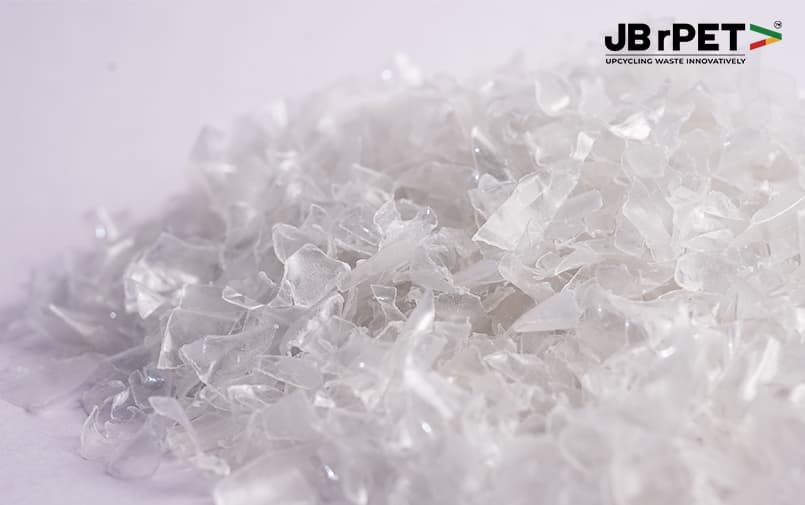
PET bottle flakes are derived from post-consumer PET bottles and represent the most common input material for recycling systems. Their characteristics depend on collection quality, sorting accuracy, and washing effectiveness.
Clear PET flakes are separated using optical sorting systems that remove colored and opaque materials. Commercially, these are often referred to as PET flakes clear grades. Their clarity supports broader downstream flexibility.
Hot washed PET flakes undergo elevated temperature washing as part of the PET flakes washing process. This step supports removal of adhesives, organic residues, and surface contaminants.
Food grade flakes are produced from controlled input streams and evaluated based on documentation, process discipline, and regulatory alignment.
Each type plays a different role across mechanical and chemical recycling of PET.
Manufacturing rPET Flakes From Post-Consumer PET
The production of rPET flakes follows a structured sequence designed to convert post-consumer PET into a consistent intermediate material.
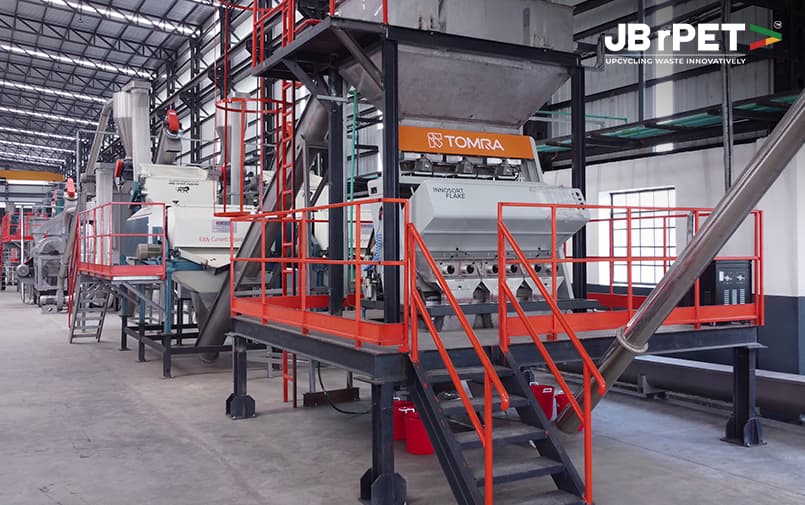
Collected PET undergoes sorting to remove non-PET materials. Bottles are shredded into flakes, followed by label separation and pre-cleaning. The PET flakes washing process then removes residues through a combination of washing, friction cleaning, rinsing, and controlled drying.
Advanced optical sorting further refines material streams, allowing separation into clear PET flakes and other grades. These steps establish physical consistency, which directly influences downstream processing behavior.
How Manufacturing Choices Shape Chemical Recycling Outcomes
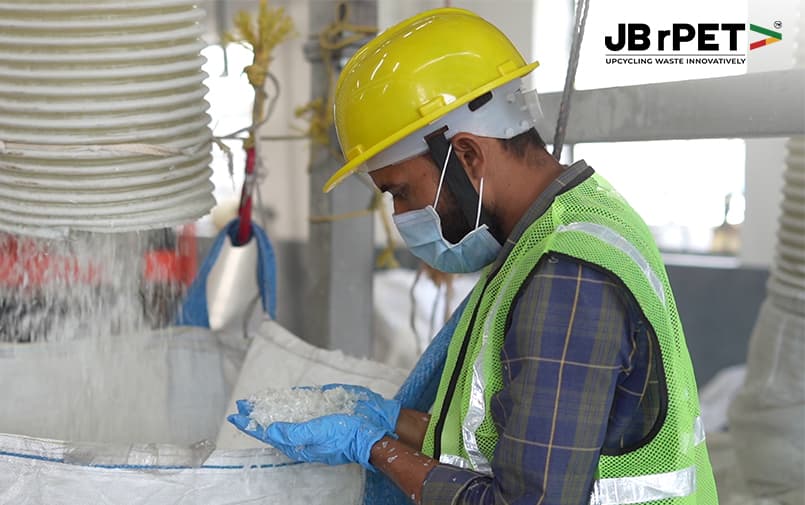
Manufacturing decisions taken at the flake level influence how materials behave during chemical recycling of PET. Washing temperature, contamination control, moisture management, and sorting precision all shape how flakes interact with chemical processes.
In chemical recycling systems, flakes act as the physical carrier of prior material history. Their preparation influences reaction stability, purification requirements, and overall system predictability. When rPET flakes are produced with chemical recycling pathways in mind, upstream discipline supports smoother downstream integration.
PET Flakes Washing Process And Readiness For Chemical Recycling
The PET flakes washing process plays a defining role in chemical recycling readiness. Washing does more than improve visual cleanliness. It prepares flakes for controlled exposure to heat, solvents, and catalysts during chemical recycling of polyethylene terephthalate.
Hot washed PET flakes are often evaluated for chemical recycling resin and its applications because elevated temperature washing supports deeper surface cleaning. This contributes to stable depolymerization behavior during the PET chemical recycling process.
For chemical recycling systems, washing supports consistency rather than cosmetic improvement. This consistency allows flakes to perform predictably when entering advanced processing stages.
Quality Parameters And Testing Standards For rPET Flakes
The quality of rPET flakes is evaluated through a combination of physical, chemical, and visual parameters. These parameters help recycling systems and PET flakes buyers assess how consistently flakes can perform across downstream processing stages, including chemical recycling of PET.
Key Physical Parameters Evaluated In rPET Flakes
- Moisture Content
Moisture levels are carefully monitored because they influence feedstock conditioning and reaction stability during the PET chemical recycling process. Controlled moisture supports predictable thermal and chemical exposure. - Bulk Density And Particle
Uniformity
Uniform flake size and density support consistent material flow through handling, feeding, and processing systems. This becomes particularly relevant for chemical recycling of polyethylene terephthalate, where steady input conditions support stable reactions.
Chemical And Compositional Parameters
- Intrinsic Viscosity Consistency
While IV is ultimately rebuilt during chemical recycling, flake-level consistency helps recyclers plan depolymerization and purification conditions more effectively. -
Residual Contaminant Levels
This includes non-PET polymers, inks, adhesives, and organic residues. The PET flakes washing process plays a central role in reducing these elements and improving material readiness.
Visual And Sorting-Related Checks
- Color Consistency
Clear PET flakes and PET flakes clear grades are visually assessed to ensure uniformity across batches. - Presence Of Foreign Materials
Optical and manual inspections support removal of metals, labels, and mixed plastics.
Together, these parameters allow rPET flakes to be evaluated as a controlled intermediate material rather than a variable waste-derived input.
Chemical Recycling Of PET And The Role Of Flake Preparation
Chemical recycling of PET involves breaking polymer chains into chemical intermediates, followed by purification and rebuilding into PET resin. While technologies differ, most PET chemical recycling process pathways include feedstock conditioning, depolymerization, and polymer reconstruction.
Throughout this sequence, the quality of rPET flakes influences system performance. Consistent flake preparation supports controlled reactions and manageable purification stages, making upstream material discipline an essential component of chemical recycling of PET.
Chemical Recycled rPET Flakes In Advanced Recycling Systems
Chemical recycled rPET flakes are flakes prepared specifically for chemical recycling pathways. Their role differs from flakes intended only for mechanical recycling.
They support stable depolymerization reactions and contribute to predictable purification workflows. As chemical recycling of PET scales, chemically recycled rPET increasingly aligns with applications that require defined material characteristics.
Chemically Recycled rPET Across Industrial Applications
Chemically recycled rPET enters applications across packaging, textiles, and industrial manufacturing. Its suitability depends on regulatory approvals, processing conditions, and end-use requirements.
Industries evaluate chemically recycled rPET based on consistency, documentation, and compatibility with existing production systems. These evaluations connect directly back to the quality of input rPET flakes.
Regulatory And Compliance Considerations In Chemical Recycling Of PET
Regulatory and compliance frameworks shape how chemical recycling of PET and CrPET are implemented across industries. These frameworks focus on transparency, documentation, and process discipline rather than outcome-based claims.
Traceability Requirements For rPET Flakes
- Source Documentation
Records related to collection streams and input materials help establish material history. -
Processing Records
Documentation of washing methods, sorting stages, and batch handling supports transparency across the PET chemical recycling process. - Batch Identification And
Segregation
Batch-level tracking allows materials to be evaluated consistently across processing stages.
Compliance Considerations For Food Grade Flakes
- Controlled Input Streams
Food grade flakes are typically sourced from monitored streams that allow traceability and documentation. - Process Validation
Chemical recycling pathways intended for food contact applications are evaluated based on validated processes and regulatory review. - Application-Specific Assessment
Suitability is assessed case by case, based on regulatory guidelines and end-use requirements.
Industry-Level Compliance Alignment
Across industries, compliance operates as a continuous process rather than a single approval point. This places importance on disciplined preparation of rPET flakes, especially as chemical recycling of polyethylene terephthalate becomes more integrated into global supply chains.
PET Flakes Buyers And Evolving Procurement Criteria
PET flakes buyers increasingly assess materials based on long-term alignment rather than short-term availability. Procurement decisions often consider washing methodology, traceability, and compatibility with chemical recycling of PET.
As chemical recycling systems expand, buyers look for flakes that support future recycling pathways and documented material flows.
rPET Flakes As A Foundation For Circular System Design
Circular systems rely on materials that can move predictably across multiple recovery and processing stages. rPET flakes support this by acting as a standardized intermediate that allows flexibility between mechanical and chemical recycling routes.
As chemical recycling of polyethylene terephthalate integrates into circular economy planning, flakes increasingly represent the point where circular intent becomes operational execution.
Implications For PET Flakes Buyers And Resin Use Cases
For PET flakes buyers, both mechanical and chemical recycling pathways play an important role in the recycled PET ecosystem. The choice between these pathways is shaped by how the resulting resins are intended to be used, rather than by differences in the flakes themselves.
In practice, rPET flakes serve as a common input material across recycling routes. It is the processing method that determines how PET is transformed into resin and how that resin performs in specific applications. Mechanical recycling reshapes PET through melting and extrusion, while chemical recycling of PET rebuilds the polymer through controlled chemical processes. Each approach produces resins with characteristics suited to different performance and regulatory requirements.
Mechanical recycling routes are widely used for applications where material performance, processing efficiency, and established supply chains align well with remelted PET resin. Chemical recycling routes support applications where molecular-level rebuilding, purification, or defined material properties are required.

From a buyer perspective, the evaluation focuses on:
- The end application of the resin
- Performance expectations at the product level
- Regulatory and compliance considerations
- Integration with existing manufacturing systems
Both recycling pathways complement each other within circular systems. PET flakes act as the shared starting point, while the choice of recycling route reflects how the resulting resin is intended to function in its next use cycle.
Looking Ahead At Chemical Recycling Systems
Global interest in chemical recycling continued to grow through 2025, supported by investments, regulatory engagement, and industry collaboration. Publicly available circular economy and energy transition reports highlight chemical recycling as part of broader material recovery strategies.
As these systems mature, the importance of well-prepared rPET flakes becomes more visible across supply chains.
JBrPET’s Perspective On Material Readiness
At JB rPET, our approach centers on preparing materials that align with evolving recycling systems. Our focus includes controlled PET flakes washing process execution, preparation aligned with chemical recycling pathways, and support for traceability and documentation.
This perspective reflects an industry moving toward greater material discipline and transparency.
Frequently Asked Questions About rPET Flakes And Chemical Recycling
What Are rPET Flakes Used For Across
Industries?
rPET flakes are used as intermediate material for
mechanical recycling, chemical recycling of PET, textiles, packaging, and
industrial applications.
How Do Hot Washed PET Flakes Support
Chemical Recycling?
Hot washed PET flakes support cleaner and more
consistent input material for the PET chemical recycling process.
What Makes PET Bottle Flakes Suitable
For Chemical Recycling?
PET bottle flakes prepared through controlled washing,
sorting, and documentation align well with chemical recycling of polyethylene
terephthalate systems.
How Do PET Flakes Buyers Evaluate
Material Quality?
PET flakes buyers evaluate washing processes,
traceability, contamination control, and compatibility with intended recycling
pathways.
Is Chemically Recycled rPET Used
Across Multiple Industries?
Chemically recycled rPET is evaluated for packaging,
textiles, and industrial applications based on regulatory and processing
criteria.