Depolymerization of PET: How Mixed Waste Streams Become a Single Consistent Resin
A recycler receives three truckloads in the same week. One carries clear bottle flake. One carries green and blue bottle flake. One carries baled polyester textile waste with dye, finish and stray label residue. Every load is PET. Every load starts life at a different molecular weight, carries a different contamination profile and would behave differently at an extruder.
The buyer at the far end of that chain wants one thing from all three. A resin that lands inside spec, batch after batch, so the spinning line behaves the same way on Tuesday as it did on Monday.
Getting from the first situation to the second is what depolymerisation of PET is for. This piece walks through how heterogeneous input becomes uniform output, stage by stage, and what a buyer should look for at each point.
Why Mixed PET Waste Is a Difficult Input Problem
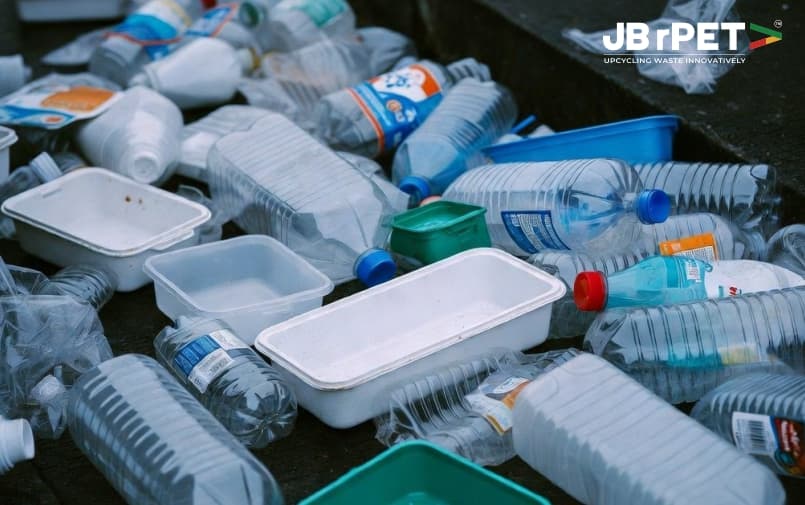
Melt-based recycling carries whatever it receives. Heat the material, filter it, pelletise it, and the polymer chain that went in is broadly the polymer chain that comes out. That works well when the input is clean and uniform.
Mixed PET waste recycling breaks that assumption in three ways at once.
Molecular weight varies by source. Bottle-grade PET, fibre-grade PET and film-grade PET are manufactured to different intrinsic viscosity targets. Blend them and you get a distribution rather than a value.
Colour and additives travel with the polymer. Dye, pigment, optical brightener and finish stay in the melt. They carry through into the output and constrain where the resin can be used.
Contamination profiles differ. Adhesive from labels, residue from contents, spin finish from fibre, and fines from handling all arrive in different quantities depending on where the bale came from.
Blend those three variables and the output specification becomes a range rather than a number. A converter buying to a range has to widen its own process window to absorb it, and that costs yield.
What Depolymerization of PET Actually Does to the Polymer
Chemical recycling of polyethylene terephthalate takes a different path. Rather than reshaping the polymer, it takes the polymer apart.
PET is a chain built from repeating units linked by ester bonds. The PET depolymerization process cleaves those bonds under controlled conditions. The long chains break down into monomers and short oligomers. What was a polymer becomes a set of chemical building blocks.
This is the step that changes the economics of difficult feedstock. Once the chain is broken, colour, additives and contaminants exist alongside the building blocks rather than inside the polymer. They become separable. The reagents and conditions used to cleave the bonds vary by route, and our chemical recycling process page sets out the specific routes in detail.
The rest of this piece follows what happens around that step, because the depolymerization reaction alone determines less than people assume. Feedstock preparation before it, and filtration and rebuilding after it, carry much of the weight.
PET Feedstock Preparation Sets the Ceiling for Everything After
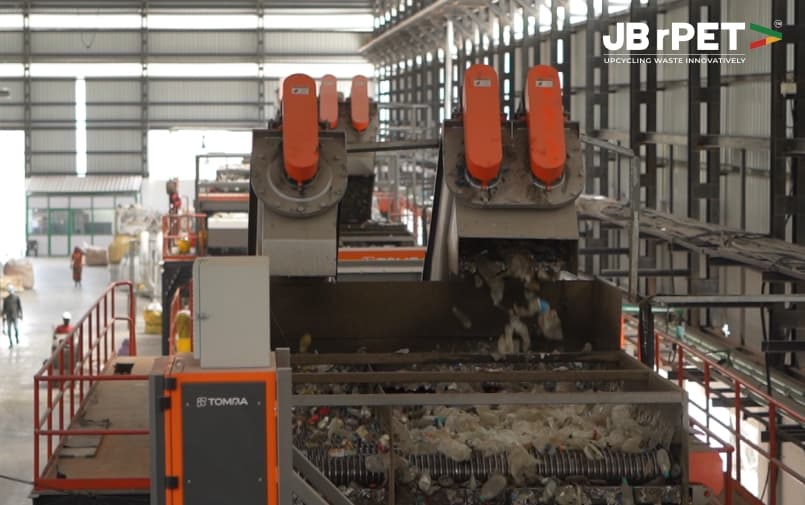
PET feedstock preparation receives little attention and deserves more. The reactor can work with the material it is given, so what arrives at the reactor door defines what is achievable downstream.
At JB rPET, the front end of the chemical plastic recycling process runs through these steps:
Sorting. Incoming PET waste is separated by type. This is where obvious foreign material and unsuitable polymer leave the stream.
Shredding and chopping. The waste is reduced in size so it can be handled, metered and fed consistently. Bottle flake, film and textile waste each need different handling to reach a usable form.
Agglomeration, where required. Some feedstock arrives at low bulk density. Loose fibre and film are the obvious cases. Agglomeration densifies that material into a form the feed system can move reliably.
The purpose of all three is the same. Turn variable waste into a physically consistent feed. Uniform feed makes uniform treatment possible, and uniform treatment is what allows mixed inputs to converge on a single output.
Multi-Stage Depolymerization at Controlled Low Temperatures
Temperature is a lever with two edges. Enough heat drives the reaction. Excess heat degrades the material and generates by-products that show up later as colour and as compounds you then have to remove.
JB rPET runs depolymerization in multiple stages at controlled low temperatures. Splitting the reaction across stages allows each stage to run under conditions suited to what is happening in it, rather than forcing the whole reaction through a single set of severe conditions.
Keeping temperatures controlled and low serves one purpose above all. It minimises degradation. Material that degrades less at this stage arrives cleaner at the next one, which reduces what filtration has to remove and what polymerisation has to correct.
Why Intrinsic Viscosity Is Driven to Zero Before It Is Rebuilt
This is the stage that answers the mixed-feedstock problem, and it is worth sitting with.
Now consider what happens when your three truckloads have three different starting IVs. In a melt-based route those differences persist into the output as a spread. In depolymerization they stop mattering, because uniform waste treatment reduces intrinsic viscosity to zero.
Read that again. Zero. The chains are taken apart completely. Whatever molecular weight the material carried when it arrived is erased.
That erasure is the harmonising step. Once every input has been reduced to the same molecular starting point, the difference between the clear bottle flake and the dyed textile waste stops being a polymer-property difference. It becomes a purity question, which the next stage handles.
The practical consequence for a buyer: the IV of the finished resin is set by the polymerisation stage rather than inherited from the bale. Our intrinsic viscosity guide covers how IV is measured and why it drives processing behaviour.
Filtration Removes What Sorting Leaves Behind
Sorting removes what a human or a sensor can see. Filtration at the molecular stage removes what neither can.
Filtering at this stage is effective for a structural reason. The material is in its depolymerised state, so contaminants sit alongside small molecules rather than being locked inside long polymer chains. Fine filtration removes them before the polymer is rebuilt around them.
This is the stage that lets coloured and contaminated feedstock produce resin suitable for demanding applications. The contaminant leaves the system before repolymerisation, so it stays out of the finished chain.
Repolymerization of PET Restores Strength to a Target IV
With purified building blocks in hand, controlled polymerization rebuilds the chains.
Because the process starts from a common molecular baseline, the IV of the output is a process setting rather than an inherited property. Repolymerization of PET is run to a target, and the target is chosen to match the application. Fibre-grade, bottle-grade and film-grade specifications sit at different IV values, and the polymerisation stage is where that value is established.
Consistent IV across batches is the outcome the whole sequence is built to deliver. It comes from three things working together: uniform feed preparation, complete reduction of the input to a common baseline, and controlled rebuilding to a specification.
Our page on bottle-derived polyester resins covers the IV targets that apply to textile grades.
Monomer Recycling and Tertiary Recycling of Polymers Explained
Two terms appear in technical and policy documents and describe what has been covered above.
Monomer recycling describes recovering a polymer's constituent monomers and using them to make new polymer. Chemical recycling to monomer for an ideal circular polymer economy is the longer form of the same idea. The carbon atoms that made the original PET make the new PET.
Tertiary recycling of polymers is the classification term. Primary recycling reuses material in its original form. Secondary recycling is the mechanical route. Tertiary recycling converts the polymer back to chemical feedstock. Quaternary recycling recovers energy.
Advanced circular polymers is the commercial phrase you will meet in datasheets. Behind it sits the same sequence: take the polymer apart, purify the pieces, put it back together to specification.
What Consistent Resin Means for Spinning Mills and Converters
Technical detail earns its keep when it changes something on a production floor.
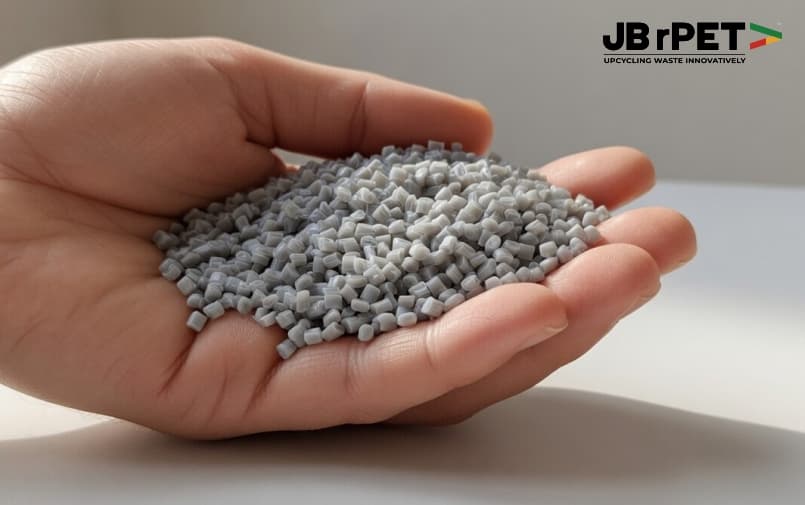
A spinning mill running partially oriented yarn sets draw ratio, temperature and take-up speed against the material it expects. Resin arriving with a different melt viscosity forces adjustment. Adjustment costs time, and variation across the run costs yield through breakage and uneven dye uptake.
A polyester staple fibre line has wider tolerances and still benefits from predictability across lots.
A packaging converter working to food-contact requirements needs purity documented per batch alongside the mechanical specification.
In all three cases the buyer is purchasing repeatability as much as material. A process that erases input variation before rebuilding to a target is designed to supply exactly that. Our applications of rPET page covers the end uses these grades feed.
Where This Sits in a Circular Polymer Economy
Indian regulation now sets recycled content requirements that rise year on year, and those requirements apply to material a producer places on the market regardless of how difficult its waste stream happens to be. Meeting a rising target using only clean, sorted bottle flake gets harder as the percentage climbs.
Depolymerization widens the pool of waste that can re-enter the polymer economy. Coloured material, mixed streams and textile-derived polyester become usable feedstock rather than a disposal problem. That is the contribution, stated plainly.
JB rPET manufactures C-rPET resin through depolymerization and repolymerization of post-consumer PET, supplying bottle-to-bottle and textile-to-textile applications. To discuss grades, specifications or documentation, get in touch.
Frequently Asked Questions
What is depolymerization of PET?
Depolymerization of PET breaks the ester bonds linking the polymer chain, reducing PET to monomers and short oligomers. These building blocks are purified and rebuilt into fresh polymer. The process allows contaminants and colour to be separated at a molecular stage.
How is depolymerization different from melting PET?
Melting reshapes PET while the polymer chain stays intact, so molecular weight and colour carry through to the output. Depolymerization takes the chain apart completely, which allows the resin to be rebuilt to a chosen specification independent of the input.
Can depolymerization handle coloured or mixed PET waste?
Yes. Because the polymer is broken down before it is rebuilt, colour and additives separate from the building blocks rather than travelling into the output. Coloured, mixed and textile-derived polyester can therefore serve as feedstock.
Why is intrinsic viscosity reduced to zero during depolymerization?
Different PET waste sources arrive at different intrinsic viscosities. Reducing IV to zero erases those differences, giving every input the same molecular starting point. The finished resin's IV is then set at the polymerisation stage rather than inherited from the feedstock.
What is monomer recycling?
Monomer recycling recovers a polymer's constituent monomers and uses them to produce new polymer. For PET, this means recovering the chemical building blocks from waste and repolymerising them, so the original carbon atoms remain inside the material system.
What is tertiary recycling of polymers?
Tertiary recycling converts a polymer back into chemical feedstock. It sits alongside primary recycling, which reuses material in its original form, secondary recycling, which is the mechanical route, and quaternary recycling, which recovers energy from waste.
Why does feedstock preparation matter in chemical recycling?
Sorting, shredding, chopping and agglomeration turn variable waste into a physically consistent feed. Consistent feed allows uniform treatment in the reactor, and uniform treatment is what lets mixed inputs converge on a single output specification.
What IV can chemically recycled PET be produced to?
Because depolymerization erases the input molecular weight, the intrinsic viscosity of the output is established during controlled polymerisation. The target is selected to suit the application, with fibre, bottle and film grades sitting at different specified values.