Recycled Masterbatch: What It Is and What the Carrier Resin Decides
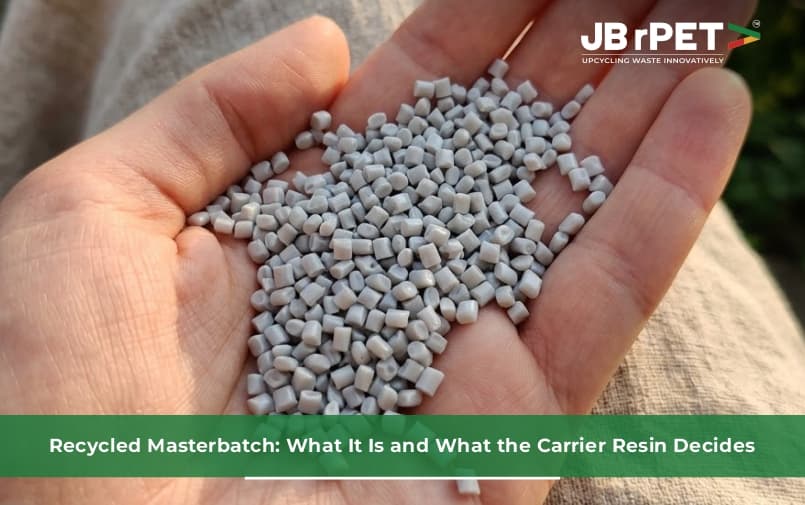
A masterbatch is a small part of any plastic product. It usually enters the hopper at a low dosing rate, and it carries the pigment or additive that gives the product its colour and behaviour. That small share now gets a lot of attention. Brands with recycled content targets are asking what sits inside every input, and the masterbatch is on that list.
Recycled masterbatch is the industry's answer to that question. The term is used loosely, so buyers and masterbatch makers often mean different things by it. As a recycled PET supplier, we have attempted to set out what the term covers, why the carrier resin sits at the centre of it, and what a masterbatch maker should check before choosing a recycled PET carrier.
What is Recycled Masterbatch?
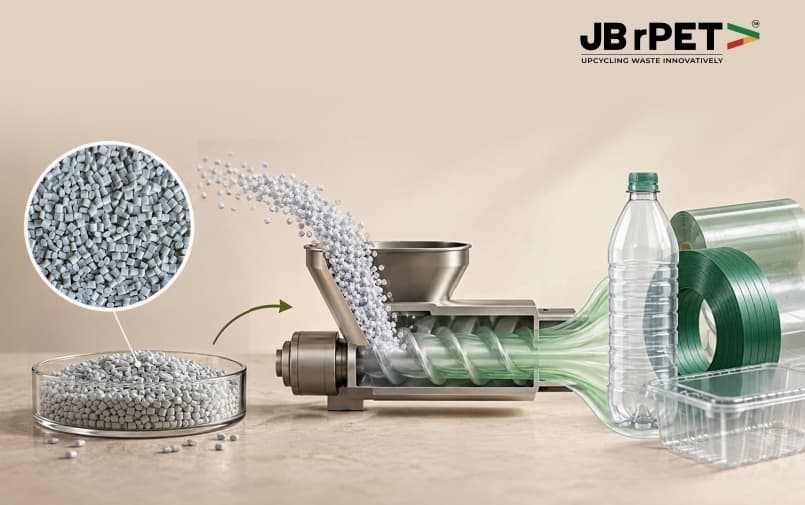
Recycled masterbatch is a concentrate of pigment or additive in which the carrier resin comes from recycled polymer. The pigment does the colouring. The carrier holds the pigment, protects it, and helps it spread evenly through the base polymer during processing. When that carrier is a recycled resin, the masterbatch is described as recycled.
The term has a second use in the market. Some suppliers use it for masterbatch that is formulated to colour or correct recycled plastics. In that case the masterbatch is designed for a recycled base polymer, and the carrier itself may come from any source.
Both uses are valid, and they answer different needs. A converter running recycled PET may want a masterbatch tuned for that base. A brand counting recycled content wants to know what the carrier is made of. Clear wording at the enquiry stage saves time for both sides. A simple way to ask is this: "Is the carrier resin in the masterbatch recycled, and what is its source?"
The first meaning is the one that affects a recycled content claim. From here on, recycled masterbatch means masterbatch built on a recycled carrier, with rPET masterbatch as the PET version of it.
What Goes into a Masterbatch?
A masterbatch has three parts.
- The active ingredient. A pigment or dye in a color masterbatch, or a functional additive such as a UV stabiliser, an optical brightener or a processing aid.
- The carrier resin. The polymer that holds the active ingredient in pellet form. It forms the larger share of most masterbatch formulations.
- Dispersing and processing aids. Small additions that help the pigment wet out and spread through the carrier during compounding.
The masterbatch maker melts the carrier, mixes in the active ingredient at high loading, and pelletises the result. The converter then doses those pellets into the base polymer at a set let-down ratio.
The carrier has one firm rule. It must be compatible with the base polymer. A PET masterbatch is built on a PET carrier so that it melts, flows and bonds with the PET it colours. Polyester masterbatch used by yarn and fibre producers follows the same logic. A mismatched carrier can show up later as streaks, weak spots or haze in the finished product.
Why Does the Carrier Resin Decide the Recycled Claim?
The carrier stays in the product. It melts into the base polymer and becomes part of the bottle, strap, sheet or yarn. Whatever the carrier is made of becomes part of what the finished product is made of.
That has a direct effect on recycled content. Take a product made fully from recycled PET. If the masterbatch uses a carrier from a fossil source, the carrier brings a small share of fossil polymer into the product. The recycled share of the final product drops by that amount. A recycled PET carrier removes that gap, because the carrier adds recycled polymer to recycled polymer.
The pigment and additives are a separate matter, since they are outside the polymer count in most formulations. The carrier is the part a masterbatch maker can change.
Paperwork follows the same path. A brand that declares recycled content needs evidence for each polymer input. For the masterbatch, that evidence comes from the carrier supplier and passes through the masterbatch maker to the converter. A carrier that arrives with chain of custody documents makes the claim easier to support at every step.
This is why the carrier decides whether a masterbatch can be called recycled, and how firmly that description can be backed.
How much does the let-down ratio matter?
The let-down ratio sets how much masterbatch enters the product. At a low ratio, the carrier is a small fraction of the final weight. At a higher ratio, as with deep shades or heavily filled additive grades, the carrier share grows and so does its effect on the recycled figure.
Two points follow for a masterbatch maker. First, customers running high let-down ratios have a clear reason to ask for a recycled PET carrier. Second, a carrier that accepts a high pigment loading allows a lower let-down ratio, which reduces the amount of carrier in the product. Both routes lead to the same result: a recycled content figure that holds up when the product is audited.
What should a masterbatch maker check in a recycled PET carrier?
A recycled PET carrier has to do everything a carrier does, and it has to do it batch after batch. Six checks cover most of what matters on a compounding line.
Intrinsic viscosity
Intrinsic viscosity is the working measure of PET chain length. It tells the compounder how the resin will flow in the extruder and how much melt strength it will hold.
PET loses some IV each time it is melted, and compounding at high pigment loading adds shear. A masterbatch maker therefore needs a carrier whose IV starts at a known value and sits within a tight band. The right starting IV depends on the application. A masterbatch for strap or monofilament works with a different IV than one for fine filament. The useful question for a supplier is which IV grades are available and how narrow the tolerance is on each.
Filtration and cleanliness
Small particles in a carrier cause large problems downstream. In filament spinning, contamination raises pack pressure and shortens the time between filter changes. In film and sheet, it appears as gels and specks.
A carrier resin that has been filtered at fine mesh during production gives the masterbatch maker a clean base to build on. Ask the supplier how the melt is filtered and at what micron rating.
Colour base
Every colour formulation starts from the natural shade of the carrier. A carrier with a stable, neutral base lets the colourist hit a shade with a predictable pigment load. A carrier whose base shade shifts between lots forces a reformulation each time.
For light, bright and pastel shades, the base colour of the carrier matters a great deal. For black and deep shades it matters less, although consistency still helps. Luster grade is part of the same check. Semi-dull, bright and super-bright resins behave differently in a finished yarn or film, so the carrier should match the grade of the base polymer.
Moisture and drying
PET absorbs moisture from the air. If it is processed wet, the chains break in the melt and IV falls. A carrier that is supplied in sealed packaging and dried correctly before compounding keeps its IV through the extruder. Drying guidance from the resin supplier is worth requesting with the first order.
Batch consistency
A masterbatch maker sells repeatability. The customer expects the same shade and the same flow from every lot. That promise depends on the carrier arriving with the same IV, the same base colour and the same cleanliness each time.
Recycled feedstock varies by nature. The production route of the carrier resin decides how much of that variation reaches the pellet. A certificate of analysis with each lot gives the compounder the numbers to verify it.
Traceability and certification
A recycled claim needs proof. The carrier supplier should hold certification for recycled content and chain of custody, and should issue transaction documents with each shipment. These documents let the masterbatch maker pass the claim to its own customers. Buyers who want a deeper check can also read how to verify recycled PET before approving a supplier.
How Does Chemically Recycled PET Resin Fit as a Carrier?
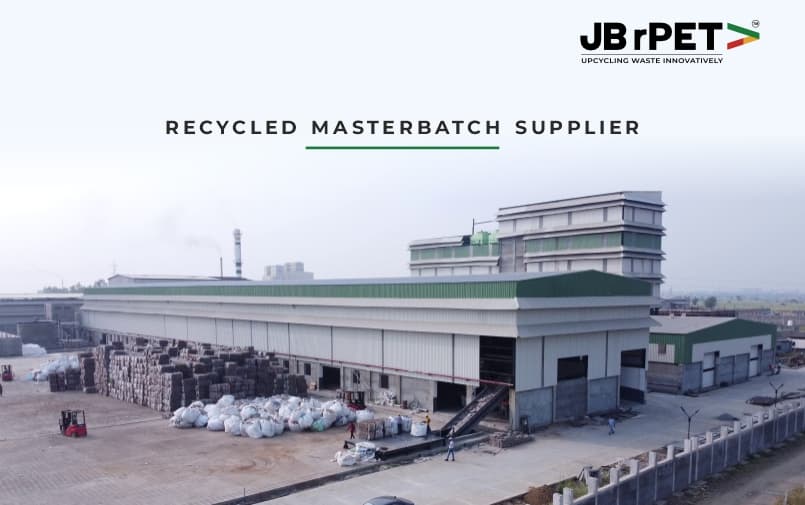
The six checks above come back to one thing: how the recycled resin was made. JB rPET produces chemically recycled PET resin, also called C-rPET, at its facility in Gujarat. The process is built around rebuilding the polymer.
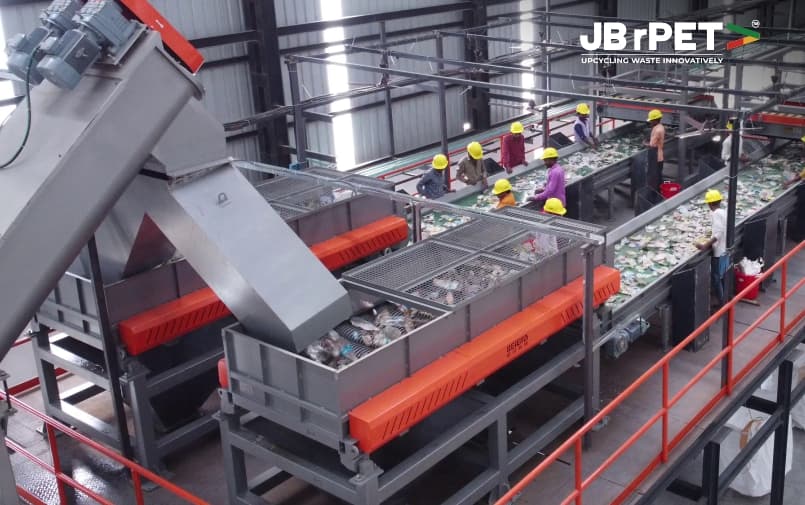
It starts with post-consumer PET bottles. The bottles are sorted, crushed and put through washed and dried to produce clean, washed flakes. The flakes then enter the chemical recycling process, where the PET is depolymerised into its molecular constituents. At that stage, colour bodies, degradation products and embedded impurities can be separated from the material.
The regenerated material is then purified through 2 to 4 micron filtration and colour rectification. After purification, it is polymerised again under controlled conditions to rebuild the PET chain to the required IV. The melt is cooled and cut into uniform resin pellets.
Three outcomes of that route matter to a masterbatch maker.
- A controlled IV. JB rPET's chemically recycled resins are produced across an IV range of 0.60 to 1.10 dL/g. The IV is set during polymerisation, so a compounder can select a grade that suits the end application.
- A filtered, colour-corrected base. Fine filtration and colour rectification happen before the polymer is rebuilt. The pellet reaches the compounder with a clean and consistent starting shade.
- A range of grades. The portfolio includes semi-dull, bright and super-bright resins, along with masterbatch-compatible variants. A masterbatch maker can match the carrier to the base polymer its customer runs.
JB rPET's products are certified under the Global Recycled Standard (GRS), ISCC PLUS and OEKO-TEX Standard 100. For a masterbatch maker, that means the recycled claim on the carrier comes with third-party documentation.
Grade details and supply terms for carrier use are on the masterbatch carrier resin page. The wider resin range is listed under C-rPET resins.
Where Is Recycled PET Masterbatch Used?
A masterbatch built on a recycled PET carrier goes wherever PET and polyester are coloured or modified in the melt. Four areas are common.
Polyester yarn and fibre. Spinners use polyester masterbatch for dope dyeing, where colour is added to the melt before the filament is formed. Black is the common example, and a full shade range follows the same method. Spinning is sensitive to contamination, so carrier cleanliness carries extra weight here.
PET strap. Strap producers use colour masterbatch, usually green or black, along with functional masterbatch that improves how the strap behaves under tension. Strap runs at higher IV, and the carrier should suit that. Resin grades for this segment are covered on the PET strap resin page.
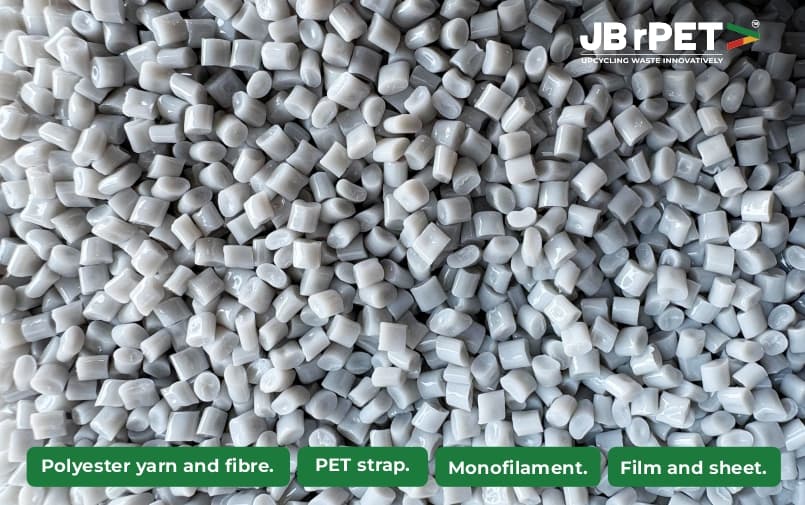
Monofilament. Bristles, zip filaments and technical monofilaments need consistent diameter and strength. Masterbatch for these lines has to disperse evenly at fine gauge. The matching base resin is described under monofilament resin.
Film and sheet. BoPET film and rPET sheet producers use colour, white and additive masterbatch. Gels and specks are visible in a thin transparent web, which makes a filtered carrier valuable.
Further downstream, coloured polyester and PET reach automotive interiors, carpets, soft toys and home textiles. The makers of those goods rarely see a masterbatch pellet. They do see the recycled content figure on the final product, and the carrier is part of that figure. A fuller view of end uses is on the rPET applications page.
What Can a Brand Ask its Masterbatch Supplier?
Brand and sourcing teams sit two or three steps away from the carrier resin. They can still shape what goes into it. Five questions bring the right information forward.
- What polymer is the carrier, and does it match our base polymer?
- Is the carrier recycled, and what share of the masterbatch does it form?
- Who produces the carrier resin, and by which recycling route?
- Which certifications cover the carrier, and will transaction documents come with each lot?
- Does the recycled content declaration for our product include the masterbatch?
A masterbatch maker with a documented recycled carrier can answer all five in one reply. That answer is often what moves a supplier onto an approved list.
For masterbatch makers, the same list works in reverse. A resin supplier who provides IV data, filtration details, lot certificates and certification scope has already done much of the preparation for a customer audit.
Frequently Asked Questions
What is recycled masterbatch made of?
Recycled masterbatch is made of a pigment or additive, a carrier resin from recycled polymer, and small amounts of dispersing aids. The carrier forms the larger share of most formulations. In a recycled PET masterbatch, the carrier is recycled PET resin.
Is rPET masterbatch the same as PET masterbatch?
rPET masterbatch is a PET masterbatch whose carrier is recycled PET. Both are designed for PET and polyester base polymers and are processed in the same way. The difference lies in the source of the carrier resin and the documents that come with it.
Does masterbatch affect the recycled content of a product?
Yes. The carrier resin in a masterbatch becomes part of the finished product. A carrier from a fossil source lowers the recycled share by a small amount. A recycled PET carrier keeps the polymer content of the product recycled.
What IV should a recycled PET carrier have?
The right IV depends on the end application and on the IV loss expected during compounding. Strap and monofilament applications work with higher IV than fine filament. JB rPET produces chemically recycled resins across an IV range of 0.60 to 1.10 dL/g, so a grade can be matched to the application.
Which certifications matter for a recycled PET carrier?
Certifications that cover recycled content and chain of custody matter for a recycled claim. JB rPET's products are certified under the Global Recycled Standard (GRS), ISCC PLUS and OEKO-TEX Standard 100. Masterbatch makers should ask for the certificate scope and for transaction documents with each shipment.
Who supplies the carrier resin for recycled masterbatch?
Recycled PET resin producers supply the carrier to masterbatch makers. JB rPET, based in Gujarat, India, produces chemically recycled PET resin in masterbatch-compatible variants and supplies it to masterbatch producers.
Choosing a Carrier for Recycled Masterbatch
A recycled masterbatch is only as sound as its carrier. The carrier sets the flow, the base shade and the cleanliness of the pellet, and it carries the recycled claim through to the finished product. Masterbatch makers who settle these points with their resin supplier early spend less time on reformulation and customer queries later.
JB rPET supplies chemically recycled PET resin to masterbatch producers, with grade selection by IV and luster. To discuss a grade for your formulation, or to request a sample and data sheet, contact JB rPET.