Recycled PET Suppliers and the Logistics Backbone Powering Chemical Recycling Futures
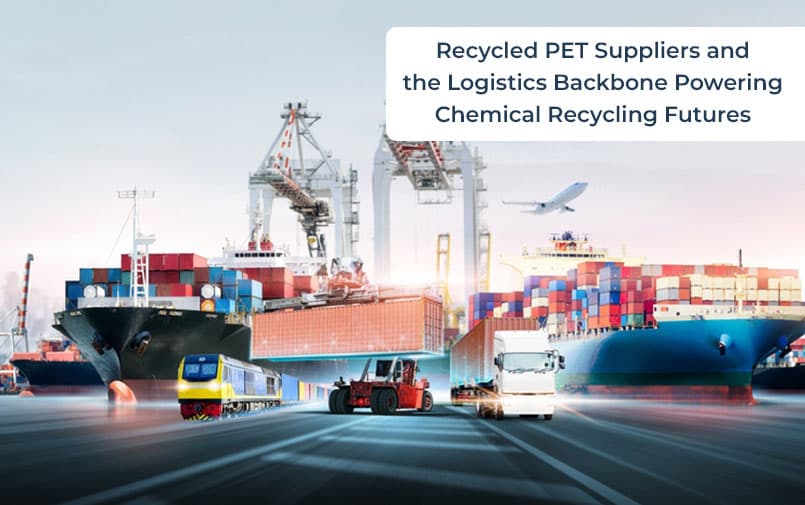
The future of plastic recycling is often discussed in terms of technology. Advanced depolymerisation, solvent-based recovery, and chemical recycling innovations tend to dominate conversations. Yet, behind every successful chemical recycling system lies something far more fundamental. A steady, traceable, and well-managed supply of PET material.
This is where recycled PET suppliers quietly shape the direction of the industry.
Without reliable suppliers who understand material quality, logistics, and compliance, even the most advanced chemical recycling facilities struggle to operate at scale. Chemical recycling does not begin inside reactors or processing units. It begins much earlier, at the point where PET waste is collected, sorted, cleaned, and prepared for transformation.
This blog explores how recycled PET suppliers and their logistics ecosystems act as the backbone of chemical recycling futures, enabling consistency, scalability, and long-term circularity.
Understanding the Role of Recycled PET Suppliers in Modern Recycling Systems
Recycled PET suppliers are no longer just intermediaries between waste collection and recycling plants. Their role has expanded significantly as recycling systems have become more sophisticated. They now deal with legal compliances like EPR and issuing of plastic credits and carbon goals.
At a fundamental level, suppliers aggregate PET waste from multiple sources, including post-consumer packaging, industrial scrap, and recycled PET plastic bottles. However, for chemical recycling to work efficiently, the material supplied must meet stricter standards than traditional mechanical recycling.
Suppliers today are responsible for:
- Ensuring consistent feedstock quality
- Managing contamination levels
- Maintaining traceability across batches
- Aligning material preparation with downstream recycling processes
In chemical recycling of PET, impurities can disrupt reactions, reduce yields, and increase processing costs. This makes supplier-level controls critical to the success of the entire value chain.
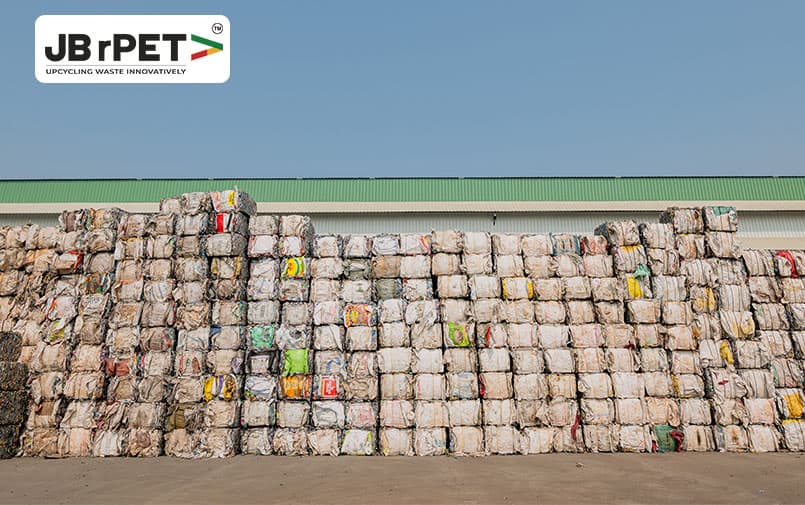
From PET Waste to Structured Feedstock
PET waste exists in many forms. Bottles, thermoforms, films, and packaging each behave differently during processing. Recycled PET suppliers play a key role in transforming mixed PET waste into structured feedstock suitable for recycling pathways.
This includes sorting, washing, flake preparation, and material segregation based on colour, polymer grade, and contamination levels. The better this groundwork is handled, the more predictable the outcomes become during recycling.
Why Logistics Matter More Than Ever in Chemical Recycling
Chemical recycling relies on continuous operation. Any interruption in feedstock availability can halt production and compromise economic viability. This makes logistics a defining factor in the success of chemical recycling facilities.
Unlike traditional recycling, where material shortages can be buffered more easily, chemical recycling systems depend on stable inflows of PET waste and CrPET feedstock.
Logistics networks must account for:
- Regional availability of PET bottles recycling streams
- Transportation distances and costs
- Storage conditions that preserve material integrity
- Timing and volume predictability
Recycled PET suppliers act as coordinators within this logistics ecosystem, balancing supply and demand across multiple stakeholders.
Collection Networks as the First Link
Collection is where recycling success or failure often begins. PET waste must be captured efficiently before degradation, contamination, or loss occurs. Suppliers work with municipalities, waste aggregators, and informal collection networks to ensure PET waste is recovered at scale.
This upstream coordination directly affects the availability of recycled material using plastic bottles and determines how much usable feedstock reaches recycling plants.
Recycled PET Suppliers as Enablers of Chemical Recycling of PET
Chemical recycling of PET offers the promise of restoring polymers closer to virgin-equivalent quality. However, this promise can only be realised when input materials are consistent and traceable.
Recycled PET suppliers support chemical recycling by delivering feedstock that aligns with process requirements. This includes controlling moisture levels, polymer composition, and contamination thresholds.
Suppliers who understand the relation of chemical recycling process to rPET performance become strategic partners rather than transactional vendors.
Supporting Advanced Recycling Pathways
CrPET, or chemically recycled PET, depends on upstream material quality. Suppliers who can consistently deliver PET waste suitable for chemical recycling help unlock higher-value applications, including CrPET resins used in fibres, packaging, and industrial applications.
These suppliers also contribute to improving recycling yields, reducing processing losses, and supporting circular material flows.
The Growing Importance of CrPET in Circular Supply Chains
CrPET has emerged as a key material in discussions around advanced recycling and circularity. Unlike conventional recycled polymers, CrPET enables repeated recycling cycles with minimal degradation when processes are properly controlled.
Recycled PET suppliers influence CrPET availability by managing feedstock selection and preparation. PET waste that is unsuitable for mechanical recycling often finds new value in chemical recycling streams when properly handled.
CrPET Resins and Their Market Relevance
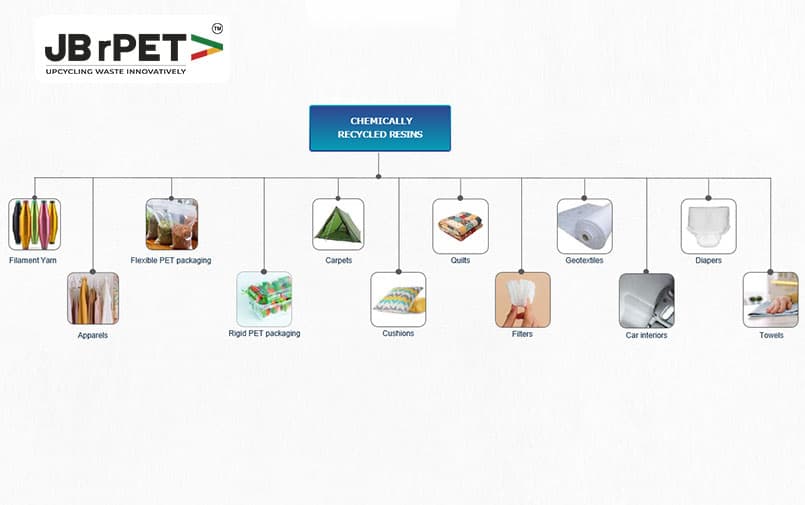
CrPET resins are increasingly used where quality consistency matters. Applications include fibres, packaging components, and industrial products that demand predictable performance.
The role of suppliers in this ecosystem extends beyond material delivery. They also support traceability, documentation, and compliance alignment, which are critical for downstream users adopting recycled polyester from plastic bottles or other recycled outputs.
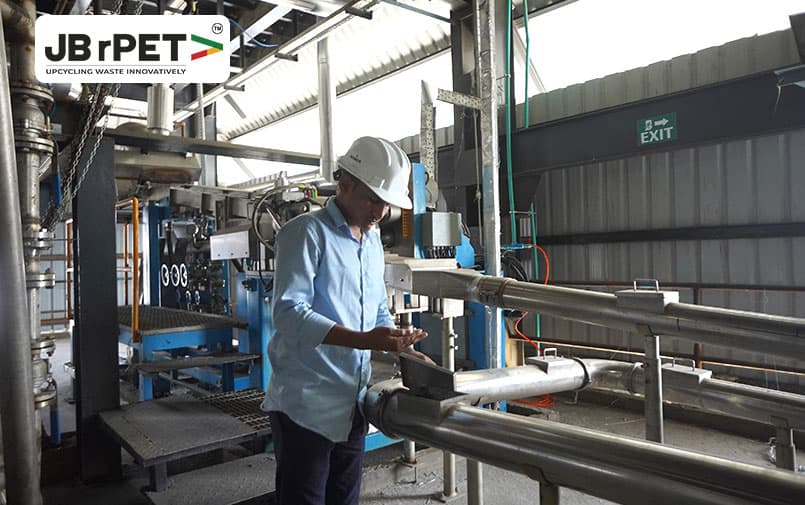
How JBrPET Strengthens the Chemical Recycling Supply Chain
JBrPET operates at the intersection of material science, supply chain discipline, and chemical recycling readiness. Their approach reflects how recycled PET suppliers must evolve to support advanced recycling systems that demand consistency, traceability, and scale.
Rather than treating PET waste as a generic input, JBrPET focuses on transforming it into structured, process-ready feedstock that aligns with chemical recycling requirements. This includes careful sourcing, controlled preparation, and an understanding of how upstream decisions influence downstream outcomes.
By working across collection, sorting, and material preparation stages, JBrPET helps bridge the gap between PET bottles recycling and chemical recycling outputs. Their operations are designed to support stable material flows that chemical recycling systems depend on, especially when converting complex or lower-grade PET waste into valuable recycled outputs.
This supply-side discipline enables chemical recycling systems to operate with greater predictability, reduced material loss, and improved output consistency. In a recycling landscape where scale and reliability matter as much as technology, JBrPET demonstrates how suppliers can act as enablers rather than bottlenecks.
B2T and T2T Resins in Chemical Recycling Systems
Chemical recycling enables material pathways that go beyond traditional recycling limitations. Two important outcomes of this process are Bottle-to-Textile (B2T) and Textile-to-Textile (T2T) resins, both of which support higher levels of circularity.
B2T resins are derived when PET waste, particularly from recycled PET plastic bottles, is processed through chemical recycling to create feedstock suitable for polyester fibre applications.
T2T resins extend this circular model further. Through chemical recycling of PET, post-consumer or post-industrial polyester textiles can be broken down and reprocessed into new resin streams. These resins can then be used to create new polyester fibres, closing the loop within the textile waste recycling value chain itself.
Both B2T and T2T resins rely heavily on upstream material quality and logistics coordination. Recycled PET suppliers play a critical role in enabling these pathways by ensuring that PET waste and polyester inputs are collected, segregated, and prepared in ways that align with chemical recycling process requirements.
For suppliers and recyclers alike, these resin pathways demonstrate how chemical recycling supports circular systems that move beyond single-use recovery toward continuous material regeneration.
Managing Quality and Consistency Across Supply Chains
Consistency is one of the biggest challenges in recycling. PET waste composition varies across regions, seasons, and collection systems. Recycled PET suppliers act as stabilising forces by blending materials, standardising processes, and applying quality checks before dispatch.
Quality management includes:
- Sorting accuracy
- Washing effectiveness
- Flake size uniformity
- Contamination monitoring
These steps reduce variability and make chemical recycling systems more reliable over time.
Why Quality Impacts Economics
Chemical recycling facilities operate on tight margins. Poor feedstock quality increases energy consumption, processing time, and waste generation. Suppliers who deliver high-quality PET waste help reduce these costs and improve overall system efficiency.
This economic impact makes supplier selection a strategic decision rather than a procurement exercise.
PET Bottles Recycling and Its Link to Chemical Recycling
PET bottles recycling remains one of the largest sources of recyclable PET globally. Bottles offer relatively consistent polymer quality and are widely collected.
Recycled PET suppliers leverage bottle recycling streams to supply both mechanical and chemical recycling pathways. When bottles are unsuitable for mechanical recycling due to colour, contamination, or degradation, they can still serve as valuable feedstock for chemical recycling of PET. This means that it goes beyond the often misaligned competition between mechanical and chemical recycling of PET and establishing that both have their own areas of application in the achievement for circularity.
This flexibility strengthens circularity by reducing material rejection and landfill dependency.
Bridging Mechanical and Chemical Recycling
Suppliers often operate at the intersection of mechanical and chemical recycling. By directing PET waste to the most appropriate pathway, they maximise recovery value and minimise losses.
This decision-making capability plays a crucial role in advancing recycling outcomes across the industry.
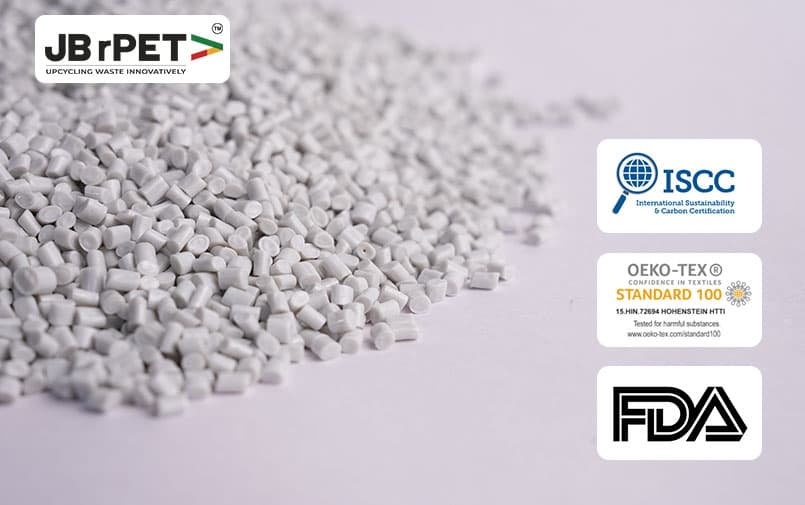
Traceability and Compliance in Recycled PET Supply Chains
As regulations evolve and sustainability claims face greater scrutiny, traceability has become a non-negotiable requirement. Recycled PET suppliers support compliance by maintaining records of material origin, processing steps, and movement across the supply chain.
Traceability helps:
- Verify recycled content claims
- Support brand reporting requirements
- Align with emerging regulatory frameworks
In chemical recycling, traceability also supports process optimisation by linking feedstock quality to output performance.
Transparency as a Competitive Advantage
Suppliers who invest in transparent systems gain trust across the value chain. This trust enables long-term partnerships, especially in sectors using recycled polyester from plastic bottles or advanced recycled materials.
Logistics Challenges Facing Recycled PET Suppliers
Despite their importance, suppliers face significant challenges. Transportation costs, infrastructure gaps, and fragmented collection systems can limit supply consistency.
Key challenges include:
- High logistics costs for low-density materials
- Inconsistent collection volumes
- Infrastructure limitations in certain regions
- Storage constraints for processed PET waste
Addressing these challenges requires coordination, investment, and collaboration across stakeholders.
How Technology Is Supporting Supplier Efficiency
Digital tools and data systems are increasingly supporting recycled PET suppliers. Tracking platforms, quality monitoring systems, and logistics optimisation tools help suppliers manage complexity at scale. Technology enables better forecasting, reduces losses, and improves coordination between suppliers and recycling facilities.
Recycled PET Plastic Bottles and Their Ongoing Importance
Despite diversification in PET waste sources, recycled PET plastic bottles remain a cornerstone of recycling supply chains. Their widespread use and established collection systems make them a reliable feedstock source.
Suppliers continue to rely on bottle streams while expanding into other PET waste categories to support growing chemical recycling capacities.
Recycled Material Using Plastic Bottles in Future Applications
The end uses of recycled material using plastic bottles are expanding. Beyond packaging and fibres, recycled outputs now support automotive components, industrial textiles, and construction applications.
Suppliers enable this expansion by delivering feedstock that meets application-specific requirements.
The Future Outlook for Recycled PET Suppliers
As chemical recycling scales, the role of recycled PET suppliers will continue to evolve. Suppliers will increasingly be evaluated on their ability to deliver consistency, traceability, and logistics reliability rather than just volume.
Future trends include:
- Closer integration with chemical recyclers
- Greater focus on feedstock optimisation
- Expanded traceability requirements
- Increased demand for CrPET resins
Suppliers who adapt to these shifts will shape the next phase of circular plastic systems.
Frequently Asked Questions About CrPET, B2T, and T2T Resins
What are CrPET resins and how are they different from mechanically recycled PET?
CrPET resins are produced through chemical recycling of PET, where the polymer is broken down and reprocessed to restore material properties. This process allows better consistency and wider application potential compared to mechanically recycled PET, especially for fibre and advanced uses.
What is the difference between B2T and T2T resins?
B2T resins, or Bottle-to-Textile resins,
are derived when recycled PET plastic bottles are chemically recycled and
converted into polyester feedstock for textile applications.
T2T resins, or Textile-to-Textile
resins, are produced when polyester textile waste is chemically recycled and
reintroduced into new textile manufacturing, enabling deeper circularity within
the textile value chain.
Are CrPET resins suitable for polyester fibre and textile manufacturing?
Yes. CrPET resins are widely used for producing recycled polyester from plastic bottles and textile waste. Their controlled processing makes them suitable for applications where fibre consistency and performance are important.
What type of PET waste is used to produce CrPET resins?
CrPET resins can be produced using PET waste from multiple sources, including PET bottles recycling streams, post-consumer packaging, and polyester textile waste. The suitability of material depends on sourcing, segregation, and preparation quality managed by recycled PET suppliers.
How does chemical recycling improve material consistency for buyers?
Chemical recycling of PET reduces variability caused by colour, contamination, or degradation in PET waste. This results in more predictable resin performance, which is important for buyers using CrPET resins in industrial or textile applications.
Can CrPET resins support circular economy and recycled content goals?
CrPET resins support circularity by allowing PET waste and polyester textiles to be recycled multiple times. This helps brands increase the use of recycled material using plastic bottles or textile waste while maintaining material performance across cycles.
What should buyers look for when sourcing CrPET resins?
Buyers should consider feedstock traceability, supplier logistics capability, material consistency, and alignment with intended applications. Working with experienced recycled PET suppliers helps ensure stable supply and reliable resin quality.
Are B2T and T2T resins dependent on upstream supply chains?
Yes. Both B2T and T2T resins rely heavily on upstream collection, sorting, and logistics systems. Consistent PET waste sourcing and preparation play a key role in ensuring reliable chemical recycling outcomes.
How do recycled PET suppliers impact CrPET resin availability?
Recycled PET suppliers manage PET waste aggregation, logistics, and preparation. Their ability to deliver consistent feedstock directly affects the scalability, availability, and quality of CrPET resins produced through chemical recycling.
Where are CrPET resins commonly used today?
CrPET resins are commonly used in polyester fibres, textiles, industrial materials, and other applications where recycled polyester from plastic bottles or textile waste is preferred to support sustainability goals.
Strengthening the Backbone of Chemical Recycling Futures
The future of chemical recycling will not be defined by technology alone. It will be shaped by the strength of the supply chains that feed it, the logistics systems that sustain it, and the suppliers who ensure consistency at every stage.
Recycled PET suppliers form the backbone of this ecosystem. Their ability to manage PET waste, coordinate logistics, and support chemical recycling of PET determines how scalable and resilient recycling systems can become.
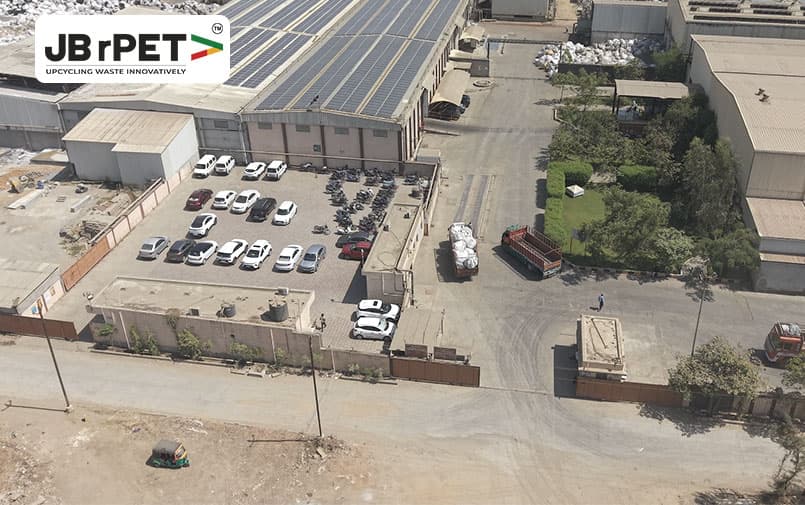
JB rPET represents this evolving role in action. By aligning material preparation with chemical recycling needs and supporting pathways such as CrPET, B2T, and T2T resins, JBrPET contributes to recycling systems that prioritise circularity, reliability, and long-term value creation.
As demand for recycled polyester from plastic bottles and advanced recycled materials continues to grow, suppliers who combine operational discipline with chemical recycling readiness will define the next phase of sustainable material systems. JBrPET’s work highlights how this backbone is built, not through isolated innovation, but through integrated, well-managed supply chains.