Recycled Polyester: From Waste Bottles to Wearable Fabric
The modern textile industry is undergoing one of its most important structural shifts. Raw material sourcing is no longer just a procurement decision. It is a strategic choice that defines performance, compliance, brand perception, and environmental responsibility.
At the center of this shift stands recycled polyester.
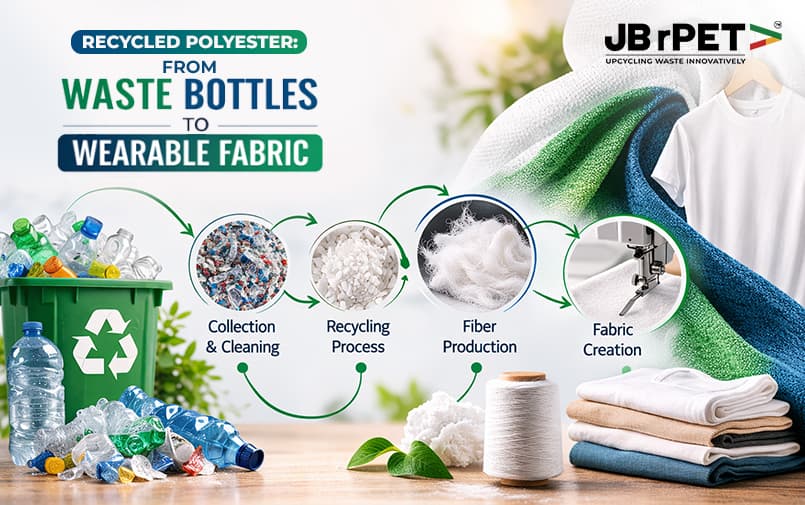
What was once considered waste in the form of discarded beverage bottles is now an engineered textile input. Through advanced plastic bottle recycling and precise polymer processing, PET bottle resin can be transformed into high-performance fiber suitable for apparel, nonwovens, home textiles, and technical fabrics.
For textile buyers, the real question is no longer whether recycled inputs are viable. The real question is how quality is preserved, how traceability is ensured, and how polymer performance compares to virgin material.
This is the journey from bottle waste to wearable fabric.
The Foundation of Recycled Polyester in Modern Textile Manufacturing
Recycled polyester begins with one of the most widely used polymers in the world: polyethylene terephthalate, commonly known as PET. PET bottle resin has historically been used in packaging due to its clarity, strength, and barrier properties. What makes it especially valuable in textiles is its molecular structure.
Polyester resin is inherently strong, lightweight, and thermally stable. These properties allow it to be melted, extruded, spun into fibers, and engineered for different deniers and applications.
When PET bottle recycling is carried out correctly, the polymer chains can be preserved or rebuilt to produce rPET resin that performs comparably to virgin polyester resin. For textile buyers, this means fiber consistency, dyeability, tensile strength, and process stability remain intact.
The transformation process is not a downgrade. When done using advanced chemical recycling routes, plastic bottle recycling can actually restore polymer purity and molecular weight, producing chemical recycled PET granules suitable for demanding textile applications.
The quality of recycled polyester depends entirely on how carefully this transformation is managed.
Plastic Bottle Recycling as a Textile Raw Material Strategy
Plastic bottle recycling is often discussed in environmental terms, but for textile buyers it is fundamentally a raw material strategy.
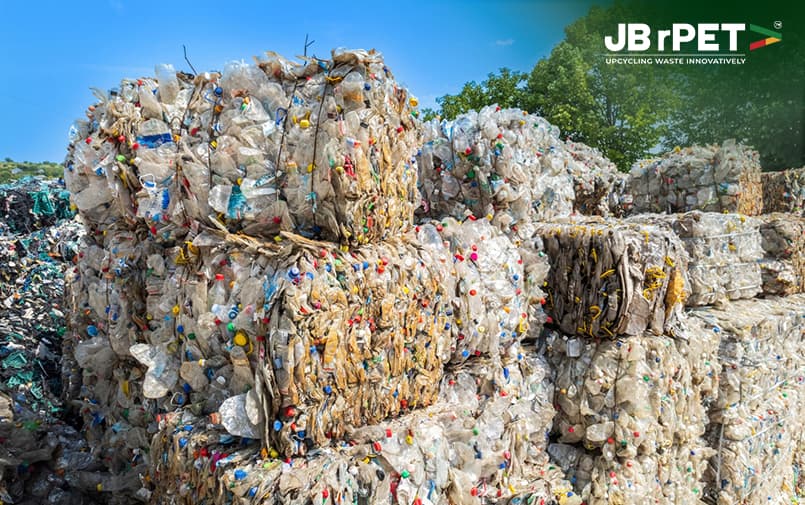
Discarded bottles are collected, sorted, and processed through controlled PET bottle recycling systems. At this stage, contamination management is critical. Labels, caps, and foreign polymers must be removed to ensure feedstock integrity.
In traditional mechanical systems, bottles are washed, crushed, and converted into flakes. These flakes are then melted and converted into rPET resin. While effective for many applications, mechanical recycling has limitations when contamination or degradation is present.
This is where advanced plastic bottle recycling technologies become important.
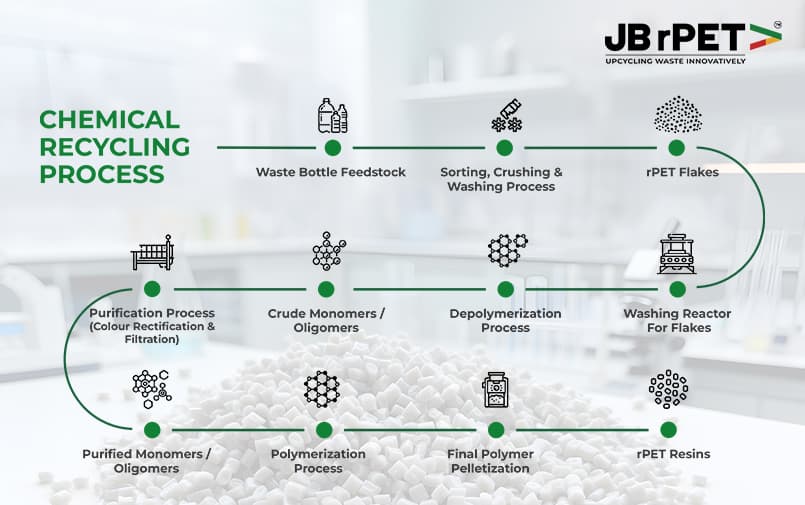
Through depolymerization processes, PET bottle resin can be broken down to its monomers. Impurities are removed at the molecular level. The polymer is then rebuilt through repolymerization into high-purity polyester resin. The result is chemical recycled PET granules that meet stringent textile performance standards. For brands seeking traceable and consistent recycled polyester inputs, this route provides structural advantages.
Plastic bottle recycling is no longer just waste management. It is polymer engineering for textiles.
Recycled Polyester and the Evolution of PET Bottle Recycling
Recycled polyester has evolved alongside advancements in PET bottle recycling technologies.
Early systems focused on diverting waste from landfill. Today, the focus is on polymer restoration, IV control, and food-grade or fiber-grade specifications. The intrinsic viscosity of polyester resin determines spinnability and final fiber properties. Maintaining or rebuilding this IV is essential for textile-grade output.
During PET bottle recycling, feedstock quality determines downstream success. Proper sorting, hot washing, and contamination control create clean rPET resin streams. In chemical recycling pathways, depolymerization into intermediates such as BHET allows purification before repolymerization.
This approach produces chemical recycled PET granules that rival virgin polyester resin in clarity, consistency, and molecular stability.
For textile mills, this means predictable spinning behavior, controlled melt flow, and stable yarn properties.
The growth of recycled polyester is directly tied to the maturation of PET bottle recycling infrastructure.
From PET Bottle Resin to Spinnable Fiber
At the polymer stage, PET bottle resin has already undergone significant transformation. Whether mechanically recycled or chemically restored, it must meet strict textile-grade parameters.
Polyester resin used for fiber production must demonstrate:
- Controlled intrinsic viscosity
- Low contamination levels
- Consistent melt flow
- Stable molecular weight distribution
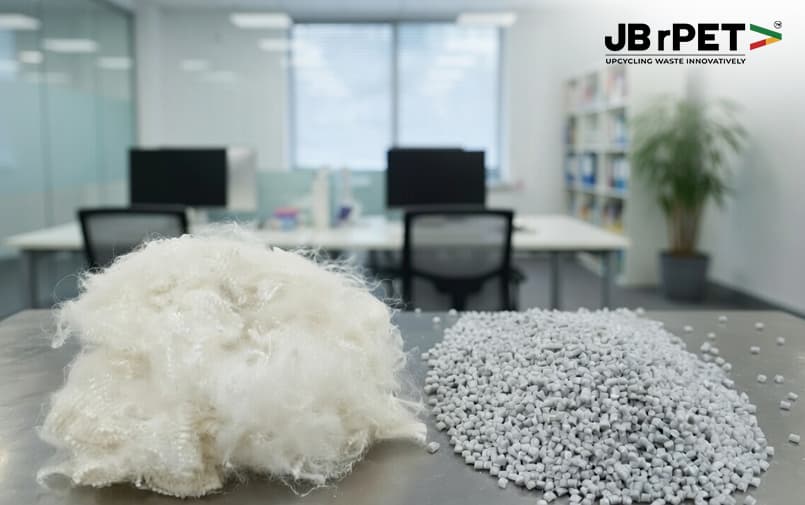
When rPET resin is produced through advanced processing, it can be pelletized into chemical recycled PET granules or fiber-grade chips. These are then dried and fed into extrusion systems.
The extrusion process melts the polyester resin and forces it through spinnerets to create continuous filaments. These filaments are cooled, drawn, and oriented to achieve strength and elasticity.
The resulting fibers are the building blocks of recycled polyester yarns used in apparel, home textiles, and technical fabrics.
The transformation is chemical, mechanical, and structural.
Recycled Polyester in Textile Performance Applications
Recycled polyester is no longer confined to basic textile uses. Today it supports high-performance applications across multiple sectors.
Textile buyers demand:
- Moisture management
- Dimensional stability
- Abrasion resistance
- Dye uniformity
- Thermal resilience
When produced from high-quality rPET resin or chemical recycled PET granules, recycled polyester demonstrates performance comparable to virgin polyester resin.
This is particularly important for brands producing plastic bottle clothing collections. Consumers expect sustainability without sacrificing durability or comfort.
For mills producing filament yarns, spun yarns, or nonwovens, the reliability of PET bottle recycling feedstock directly influences fabric quality.
Recycled polyester must behave like polyester resin, not like waste material. That distinction defines success.
Chemical Recycling and Polymer Restoration for Recycled Polyester
Recycled polyester reaches its highest potential when supported by chemical recycling technology.
In depolymerization, PET bottle resin is broken down into intermediate molecules. Contaminants are removed. The purified intermediates are then repolymerized into new polyester resin.
This process creates chemical recycled PET granules with restored molecular integrity.
From a textile standpoint, this is transformative.
For brands investing in premium plastic bottle clothing, chemical routes ensure quality stability across production batches.
This is not simply recycling. It is polymer re-engineering.
Quality Control in Plastic Bottle Recycling for Textile Buyers
Textile buyers often ask one critical question: How do we ensure consistency?
The answer lies in quality control across every stage of plastic bottle recycling.
1. Feedstock sorting using optical systems
2. Hot washing and decontamination
3. Flake analysis and contamination testing
4. IV measurement and melt flow testing
5. Pellet inspection for chemical recycled PET granules
Each stage ensures that polyester resin meets fiber-grade requirements.
Advanced PET bottle recycling facilities integrate laboratory testing to maintain stable rPET resin output. This level of control ensures recycled polyester performs reliably during spinning, weaving, knitting, and finishing.
For textile procurement teams, supplier capability matters more than marketing claims.
How Recycled Polyester Compares to Virgin Polyester Resin
For textile buyers evaluating performance risk, the most important comparison is between recycled polyester and virgin polyester resin.
From a polymer science perspective, the core chemical structure remains polyethylene terephthalate. What differs is the origin and processing pathway.
High-quality PET bottle recycling combined with polymer restoration ensures that rPET resin achieves:
- Comparable intrinsic viscosity to virgin polyester resin
- Stable molecular weight distribution
- Predictable melt flow during spinning
- Consistent dye uptake in finished fabrics
When chemical recycling is used, chemical recycled PET granules can match virgin-grade purity levels. This significantly reduces variability across batches, especially in filament yarn production.
In most textile applications, properly engineered recycled polyester performs at parity with conventional polyester resin. The difference lies not in performance, but in sourcing impact.
For brands shifting toward circular material strategies, this parity removes the performance barrier.
Recycled Polyester and the Rise of Plastic Bottle Clothing
Recycled polyester has enabled a visible shift in fashion and technical textiles.
Plastic bottle clothing is now common in sportswear, uniforms, outdoor gear, and lifestyle apparel. But beyond the label claim lies a supply chain of PET bottle recycling operations, polymer engineering, and fiber conversion.
Brands that adopt recycled polyester are not just choosing sustainability messaging. They are choosing:
- Reduced dependence on virgin polyester resin
- Circular raw material integration
- Improved ESG reporting alignment
For mills and converters, consistent rPET resin ensures that plastic bottle clothing maintains quality parity with conventional fabrics.
The shift is structural, not cosmetic.
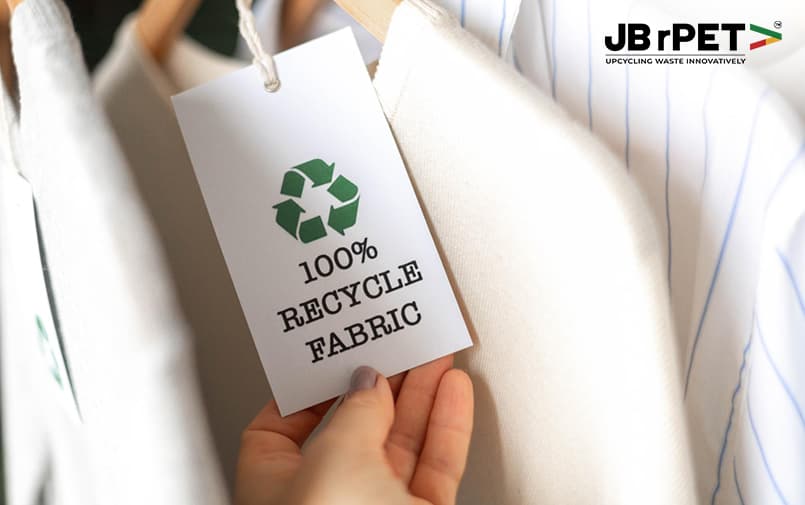
Why Textile Brands Are Prioritizing Recycled Polyester
Textile brands are increasingly integrating recycled polyester into their sourcing strategies for several reasons:
- Regulatory pressure on plastic waste
- Growing consumer awareness
- Corporate sustainability commitments
- Stable performance characteristics
High-quality PET bottle recycling systems create
dependable raw material streams. Chemical recycled PET granules provide purity
and performance. Polyester resin is restored, not compromised.
When plastic bottle recycling infrastructure aligns
with textile demand, the circular economy becomes operational rather than
aspirational.
Recycled polyester is no longer an alternative material. It is becoming a standard textile input.
Traceability and Compliance in Recycled Polyester Supply Chains
Textile brands increasingly require more than just recycled claims. They demand traceability.
Plastic bottle recycling systems must be supported by:
- Controlled feedstock sourcing
- Batch-level documentation
- IV and contamination testing records
- Certification compliance where required
Every stage of PET bottle recycling impacts final fiber quality. The conversion of PET bottle resin into rPET resin must be monitored through testing protocols that confirm consistency.
For brands producing plastic bottle clothing collections, documentation strengthens sustainability reporting and buyer confidence.
Advanced suppliers integrate traceability systems alongside production to ensure recycled polyester is not just technically viable, but verifiable.
In global textile trade, verification has become as important as performance.
The Future of PET Bottle Recycling in Textile Supply Chains
As global plastic bottle recycling capacity expands, integration with textile manufacturing will deepen.
Emerging trends include:
- Closed-loop textile-to-textile systems
- Integration of chemical recycling with mechanical systems
- Digital traceability for rPET resin
- Advanced contamination detection technologies
PET bottle resin will continue to be redirected from landfill into textile supply chains.
The production of chemical recycled PET granules will expand to support higher-grade applications.
Polyester resin demand remains strong across industries. Redirecting this demand toward recycled polyester supports long-term raw material resilience.
JBrPET: Advancing Recycled Polyester Through Chemical Recycling
At JBrPET, the focus extends beyond conventional plastic bottle recycling. The objective is polymer restoration and quality consistency for textile applications.
Through advanced depolymerization and repolymerization processes, PET bottle resin is converted into high-purity chemical recycled PET granules. This allows the rebuilding of polyester resin with controlled intrinsic viscosity suitable for fiber production.
Unlike basic flake-based systems, chemical recycling eliminates impurities at the molecular level. The result is rPET resin designed for demanding textile performance.
For textile mills, this means:
- Stable spinning performance
- Predictable yarn strength
- Consistent dye behavior
- Reduced variability across lots
Recycled polyester produced through chemical pathways ensures quality alignment with global textile standards while supporting circular raw material strategies.
JBrPET integrates PET bottle recycling expertise with polymer science to enable scalable, textile-grade recycled polyester solutions.

Building the Next Generation of Textile Raw Materials
The journey from discarded bottles to wearable fabric is not simple. It requires collection systems, advanced PET bottle recycling, polymer chemistry, extrusion technology, and textile engineering.
But when executed correctly, the result is high-performance recycled polyester that meets global textile standards.
Plastic bottle recycling becomes a source of value rather than a disposal challenge.
For textile buyers, the message is clear:
Recycled polyester is not a compromise material. It is engineered, controlled, and performance-driven.
From PET bottle resin to rPET resin, from chemical recycled PET granules to spun fiber, from polymer restoration to finished fabric, the transformation is precise.
Waste becomes wearable.
And the textile industry moves closer to a circular raw material future through textile waste recycling.
Frequently Asked Questions About Recycled Polyester
Is recycled polyester as strong as virgin polyester resin?
Yes. When produced from high-quality rPET resin or chemical recycled PET granules, recycled polyester achieves comparable tensile strength, durability, and thermal stability. Polymer restoration during chemical recycling ensures molecular integrity.
How many plastic bottles are needed to make recycled polyester fabric?
The number depends on fabric weight and yarn type. However, plastic bottle recycling enables large volumes of PET bottle resin to be converted into textile-grade polyester resin suitable for fiber production.
What is the difference between mechanical and chemical PET bottle recycling?
Mechanical PET bottle recycling melts and reforms cleaned flakes into rPET resin. Chemical recycling breaks PET bottle resin down into monomers, removes impurities, and rebuilds polyester resin into chemical recycled PET granules with restored quality.
Does recycled polyester reduce environmental impact?
Recycled polyester reduces dependence on virgin polyester resin derived from fossil fuels. It also diverts bottles from landfill and supports circular plastic bottle recycling systems.
Is plastic bottle clothing safe for skin contact?
Yes. Recycled polyester used in textiles undergoes purification and fiber processing similar to conventional polyester resin. It meets industry safety standards for apparel applications.